


Recotap is a LinkedIn-centric ABM platform built around multi-signal intent, orchestration, segmentation, and personalization. In other words, it tries to be the “do-it-all” layer.
That’s useful, but it’s still not automatically the right fit for every LinkedIn-first ABM team.
Some teams want a leaner stack (because they do not need enterprise orchestration). Others want a different strength profile (better CRM activation, cleaner attribution, tighter ad delivery control, or cheaper combos that still get the job done).
In this guide, I’ll break down 8 tools you can consider as Recotap alternatives for LinkedIn-first ABM, plus how to pick based on what Recotap does not solve for your team.
While writing this guide, I used these requirement-based buckets:
Note: Some tools span multiple categories, but none has it all unless its a $25k+/year suite that bundles features you will never touch. So I’ve also shared practical, budget-friendly “stack combos” where it makes sense.
Let’s go.
Here’s a quick comparison of Recotap alternatives:
| Tool | Category | Starting Price | Core Strength | Best For |
|---|---|---|---|---|
| 6sense | ABM Suite & Orchestration (Enterprise) | Enterprise custom quotes (usually around $50K+ per year!) | Multi-signal intent + journey staging + orchestration across channels | Enterprise ABM programs that need a wide platform and have platform budget |
| ZenABM | Lean LinkedIn-first ABM, CRM activation, intent signals, attribution dashboards (does not focus on delivery control) | $59/mo | First-party company-level LinkedIn intent + CRM workflows + pipeline-linked reporting | Teams that want Recotap-style ABM outcomes without paying for an enterprise suite |
| Factors.ai | Analytics, Visitor ID & Attribution | $399/mo+ | Cross-channel journeys, visitor identification, attribution models, and ABM views | Teams optimizing Recotap-like measurement, but with analytics-first infrastructure |
| Dreamdata | Revenue Attribution (Multi-touch) | Free tier; Paid $750/mo+ | Multi-touch revenue proof with full-funnel journey reporting | Teams that care more about CFO-proof attribution than orchestration |
| Satlo | LinkedIn-first Insights (Lightweight) | Affordable (public pricing) | Company-level LinkedIn engagement reporting + simple buyer signals | Teams that find Recotap “too much” and just want fast visibility |
| Linklo | Control (Scheduling/Pacing) | $199/mo | Dayparting, pacing discipline, delivery fairness style workflows | Teams that want control features Recotap is not built to specialize in |
| DemandSense | Control + Visitor ID (Ad Ops Companion) | $99/mo | Scheduling/pacing/frequency + optional IP/cookie visitor identification | Teams that want tighter LinkedIn ops and basic “who visited” workflows |
| Campainless | Control (Monitoring/Automation) | $49–$199/mo | 24/7 monitoring, alerts, optimization nudges, dayparting support | Advertisers and agencies that want fewer manual checks and faster issue detection |
Now here’s the “pick based on your actual problem” table:
| Your Situation | Recommended Tool | Rationale |
|---|---|---|
| You need a true ABM platform with multi-signal intent, journey orchestration, and cross-channel execution at enterprise scale. You are also ready to spend $50K+ per year. | 6sense | This is the “big platform” lane. It is built for broad orchestration, not a lean LinkedIn-first stack. Choose it when you have both complexity and budget. |
| You want Recotap-like outcomes or even better, but mainly from LinkedIn first-party engagement plus CRM activation (stages, routing, properties, alerts). | ZenABM | ZenABM turns company-level LinkedIn engagement into CRM-ready fields and workflows, so sales can act fast. You get intent, scoring, stage movement, and attribution dashboards without committing to a full enterprise suite. |
| Your priority is cross-channel analytics + visitor identification, and you want ABM views driven by attribution models, not just orchestration. | Factors.ai | Factors.ai is measurement-first. It stitches journeys across channels, supports multiple attribution models, and adds site-to-account identification for broader intent signals. |
| Leadership wants revenue proof across the whole journey, and you do not want your ABM story to live inside one platform. | ZenABM or Dreamdata | ZenABM is all you need if you only want Linkedin closed attribution forneach ad creative. Dreamdata is built for multi-channel revenue attribution and full-funnel reporting. In fact, ZenABM may be necessary even if LinkedIn is just one of the channels. |
| You feel Recotap is too heavy, and you mainly want LinkedIn-first company engagement dashboards with quick exports. | ZenABM or Satlo | Satlo is a light insights layer. It is best when you want fast “who engaged” visibility without running a full ABM orchestration engine. In the same pricing bracket |
| Your pain is delivery behavior (dayparting, pacing stability, frequency discipline), not intent modeling. | Linklo, DemandSense or Campainless | These are ad ops companions. Linklo is control-first, DemandSense adds optional visitor ID, and Campainless focuses on monitoring and alerts. |
Now, summary done. Let’s go tool by tool.
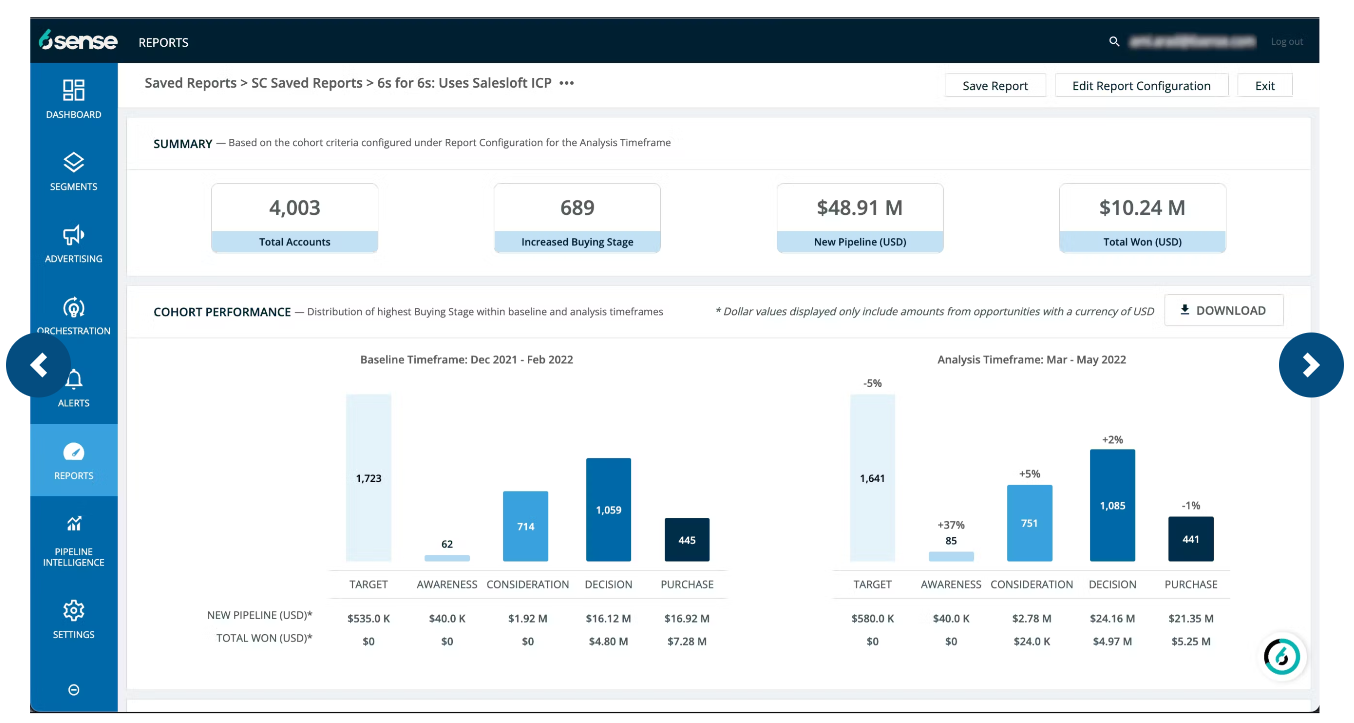
Best for: Large ABM programs that want a broad platform for intent, segmentation, orchestration, and cross-channel execution.
Recotap is strongly LinkedIn-centric and ABM-suite oriented.
6sense is typically chosen when the ABM program is bigger than any single channel, and you want a platform that can unify intent signals, stage accounts, and operationalize orchestration across multiple channels.
Most implementations revolve around:
6sense is typically heavier in cost ($50K+ per year), implementation, and ongoing ops.
If you are mainly LinkedIn-first and want first-party engagement-to-CRM activation without a platform rollout, ZenABM (or a smaller stack combo) is usually the simpler path.


Best for: LinkedIn-first ABM teams that want first-party account intent + CRM activation, without buying an enterprise orchestration suite.
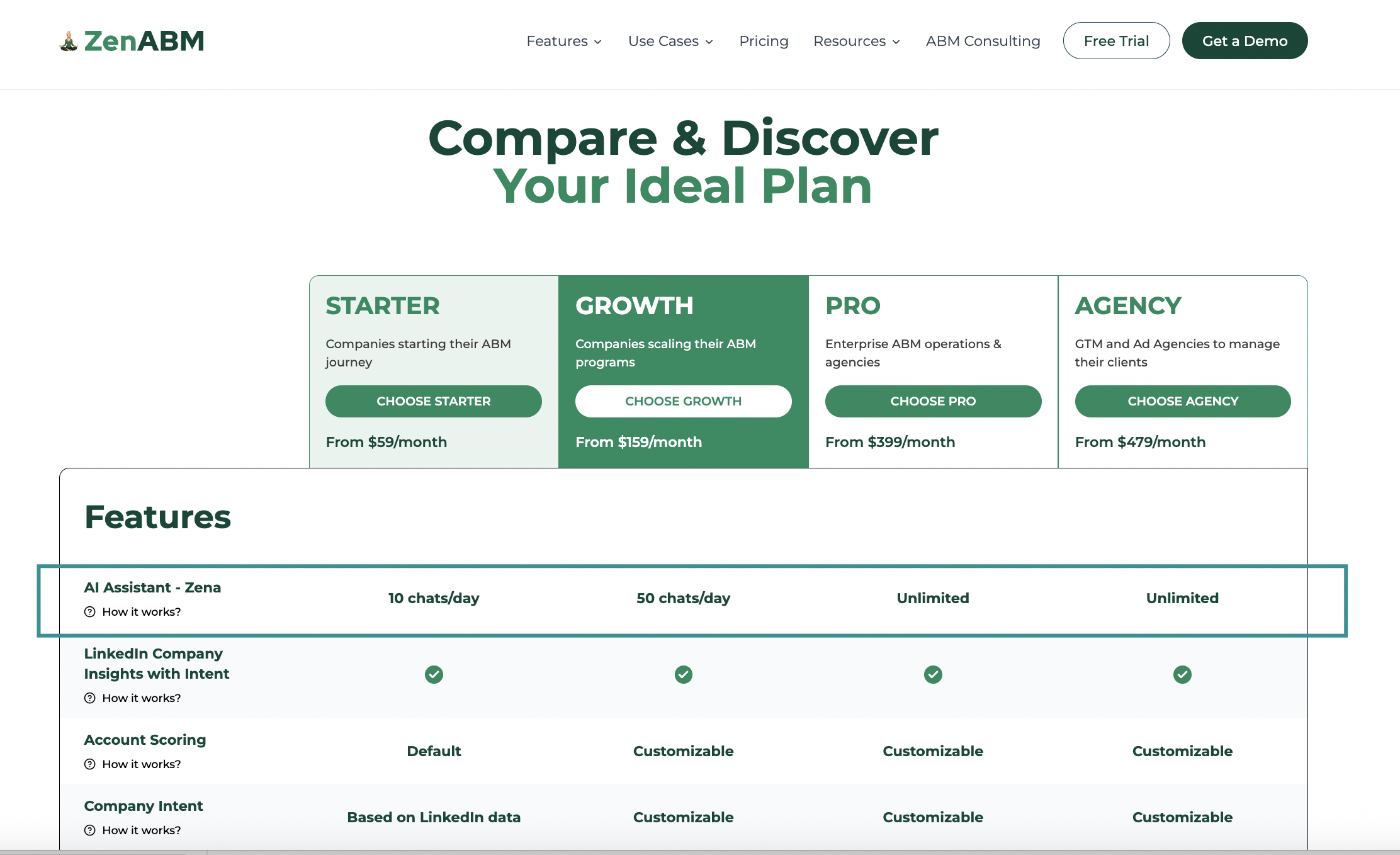
ZenABM is built to stay lean and practical while still delivering the “ABM loop” Recotap teams usually want: identify engagement, score intent, push to CRM, trigger sales action, and prove pipeline impact. Plans start at $59/month.
Recotap is designed to cover orchestration, segmentation, personalization, and multi-signal intent.
ZenABM is designed to do something simpler (and often more usable): turn LinkedIn engagement into CRM-ready intelligence and workflows, then tie it back to pipeline.
If your internal questions sound like these, ZenABM usually fits better:
Quick positioning:
ZenABM de-anonymizes LinkedIn ad engagement at the account level, so you can see which companies viewed or clicked your ads.
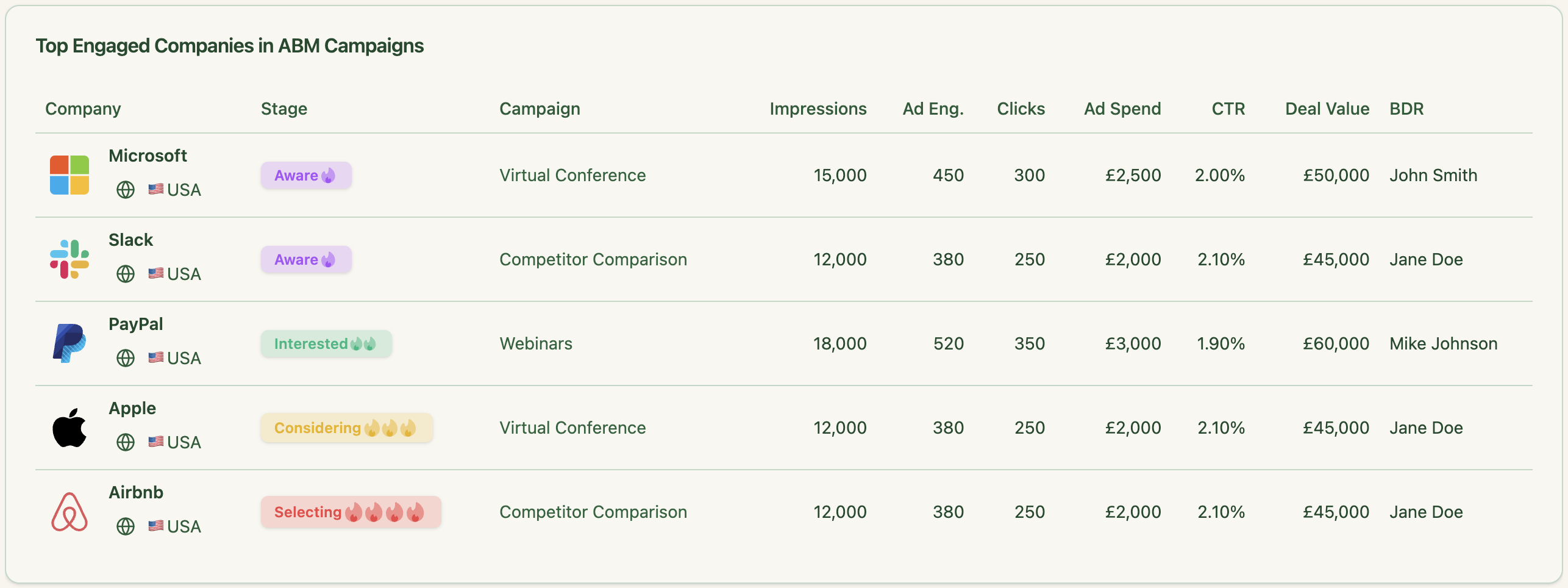
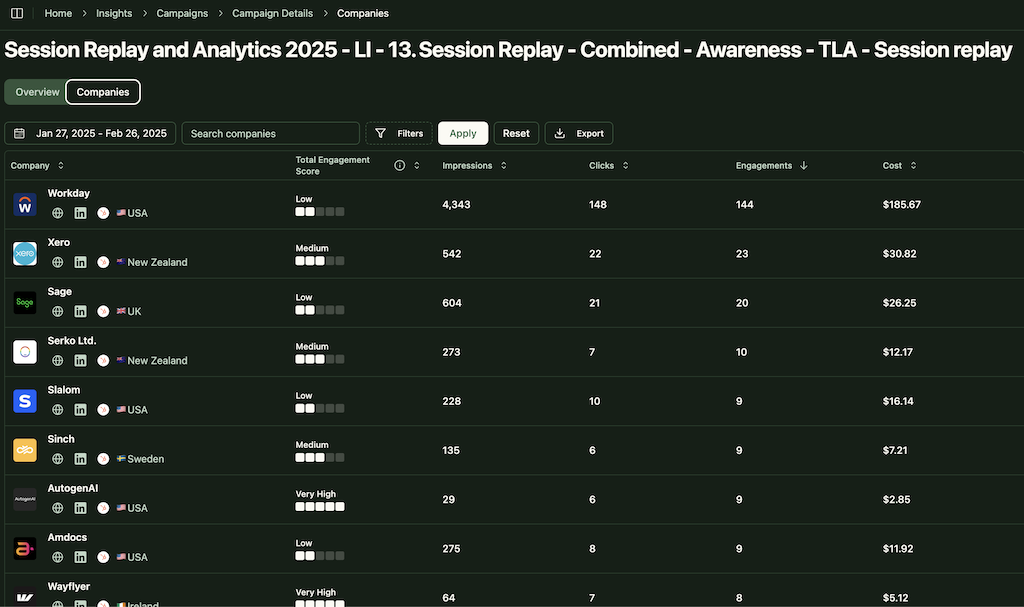
It pulls this directly from the official LinkedIn Ads API, which keeps the signal first-party.
It also avoids over-dependence on IP-based identification, which can be noisy and inconsistent.
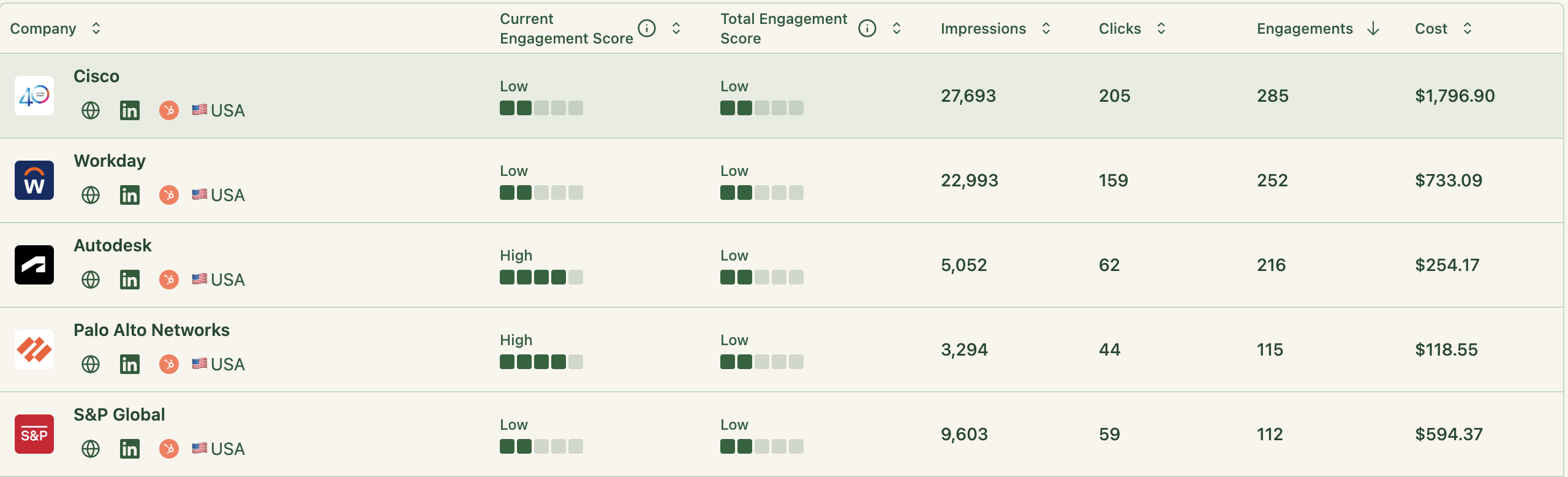
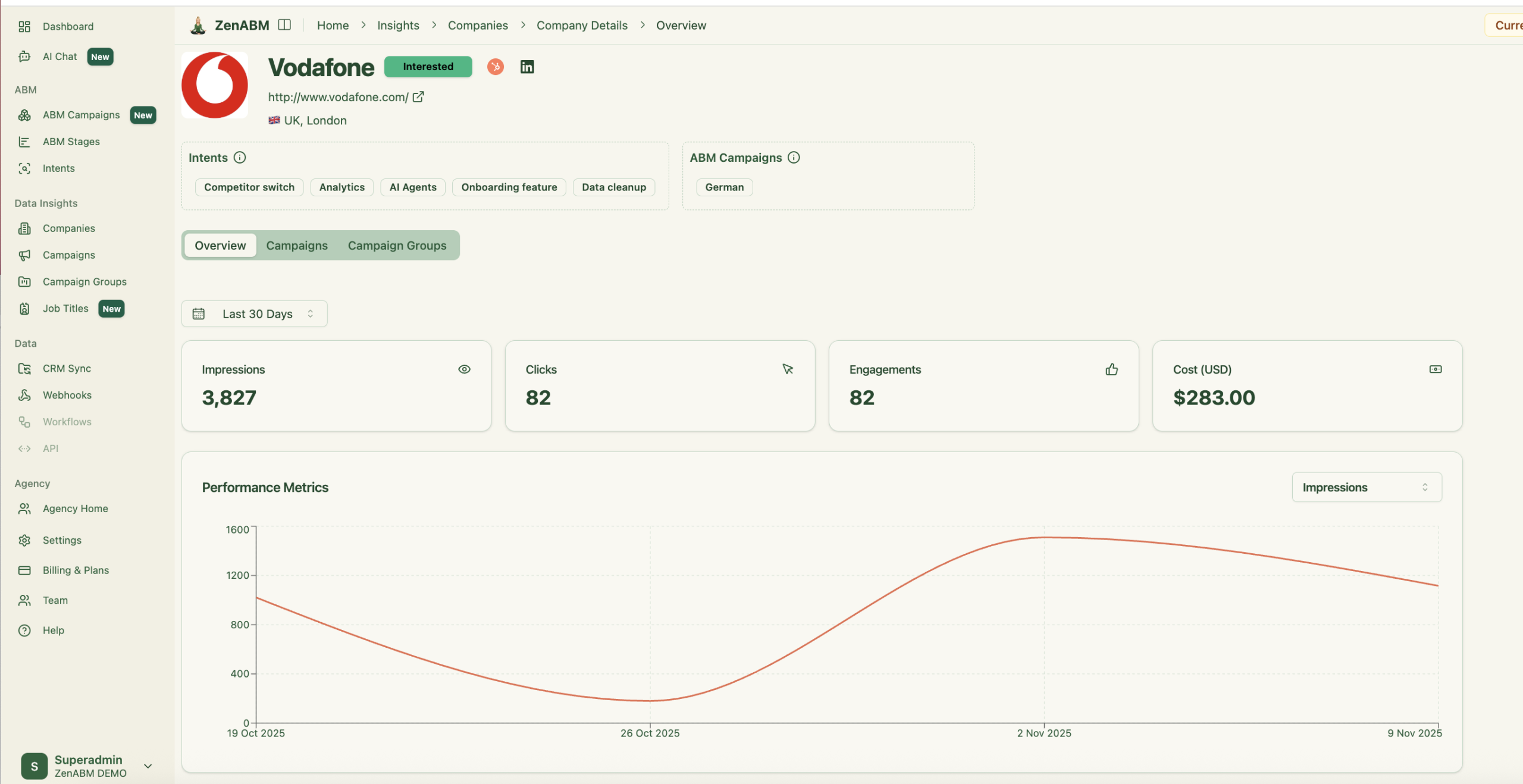
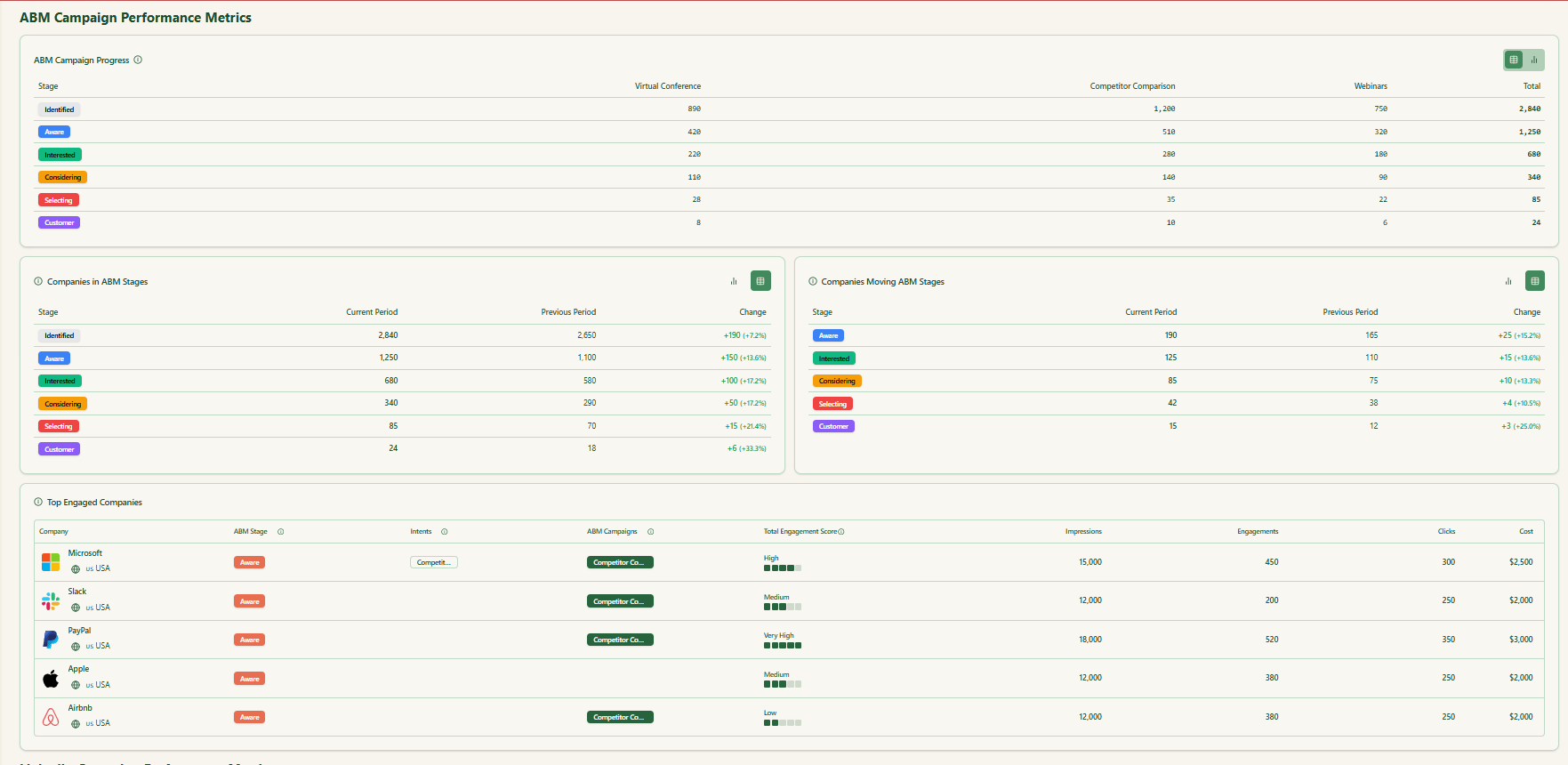
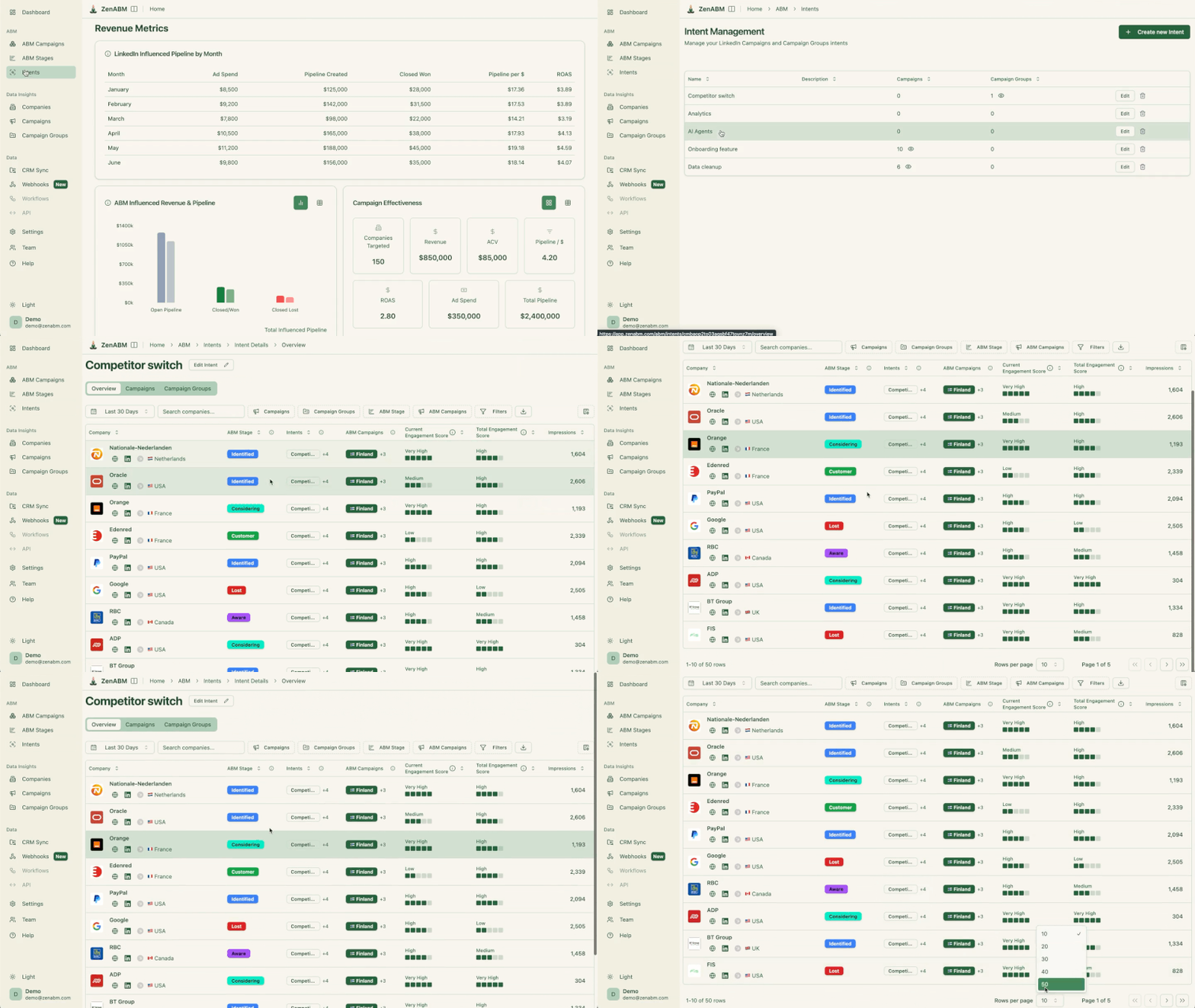
ZenABM updates engagement scores in real time as accounts interact with ads. You can map stages like Identified, Aware, Engaged, Interested, and Opportunity, and view a full touchpoint history.
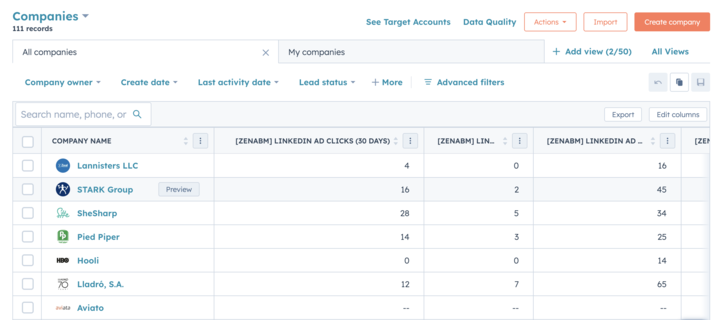
ZenABM syncs bi-directionally with HubSpot and supports Salesforce on higher plans.
All LinkedIn metrics can be written as company properties in your CRM.
When an account crosses a threshold, ZenABM can update stage and auto-assign a BDR for timely outreach.
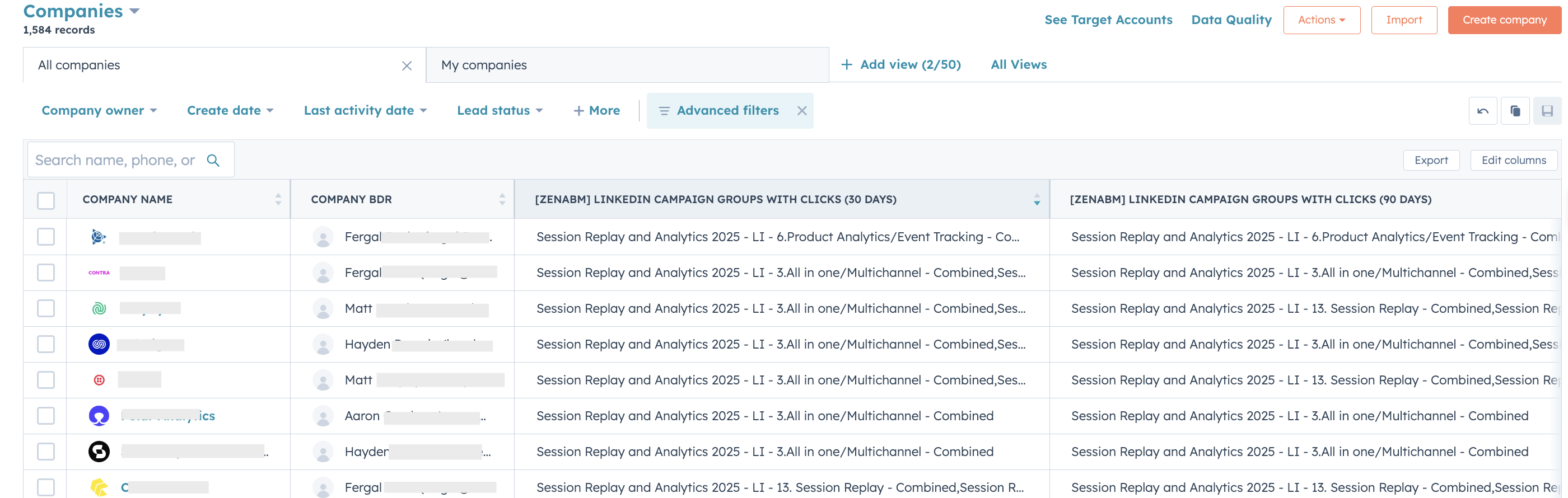
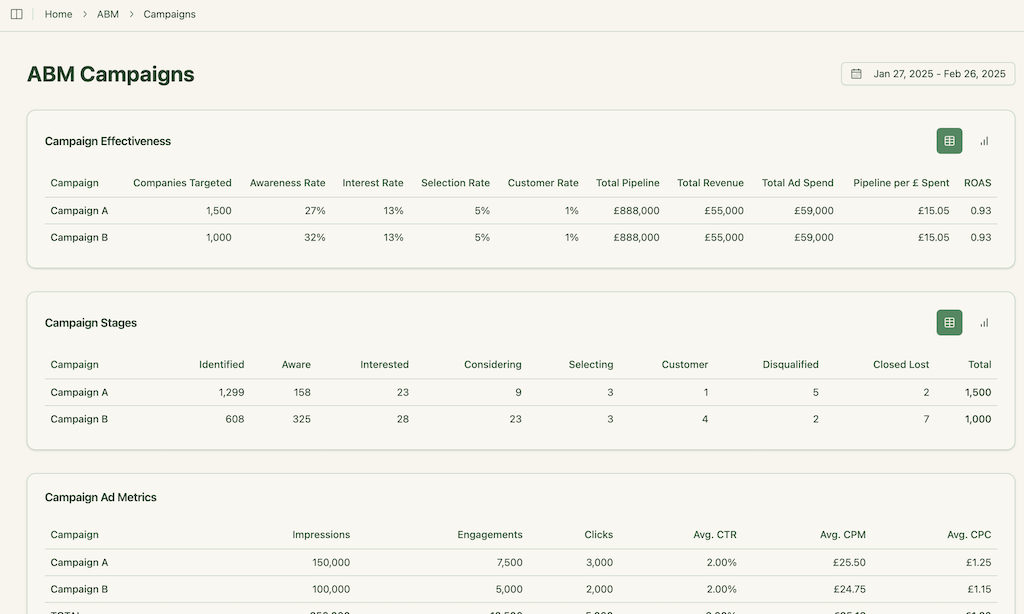
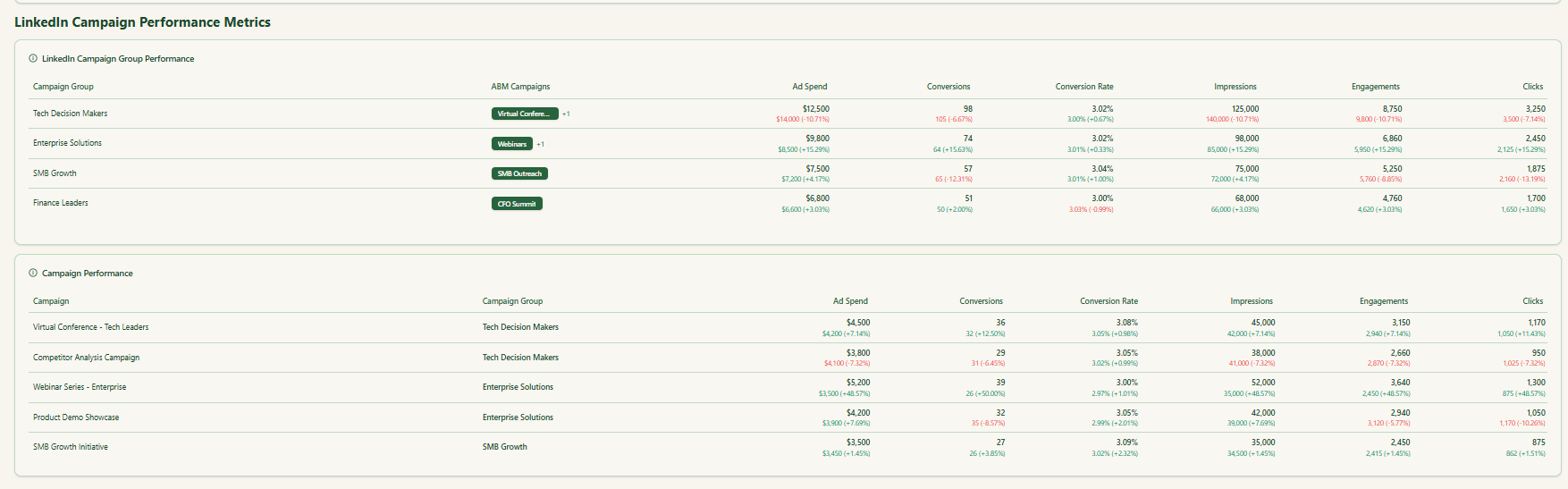
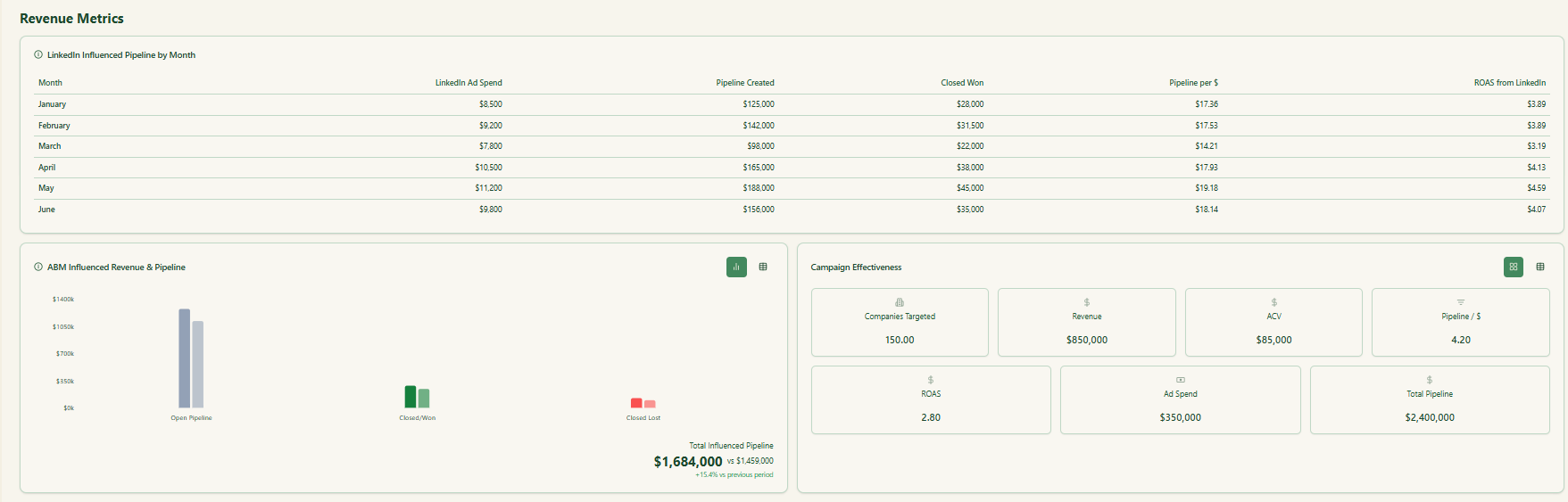
ZenABM ships dashboards that connect LinkedIn ads to account engagement, stage movement, and revenue.
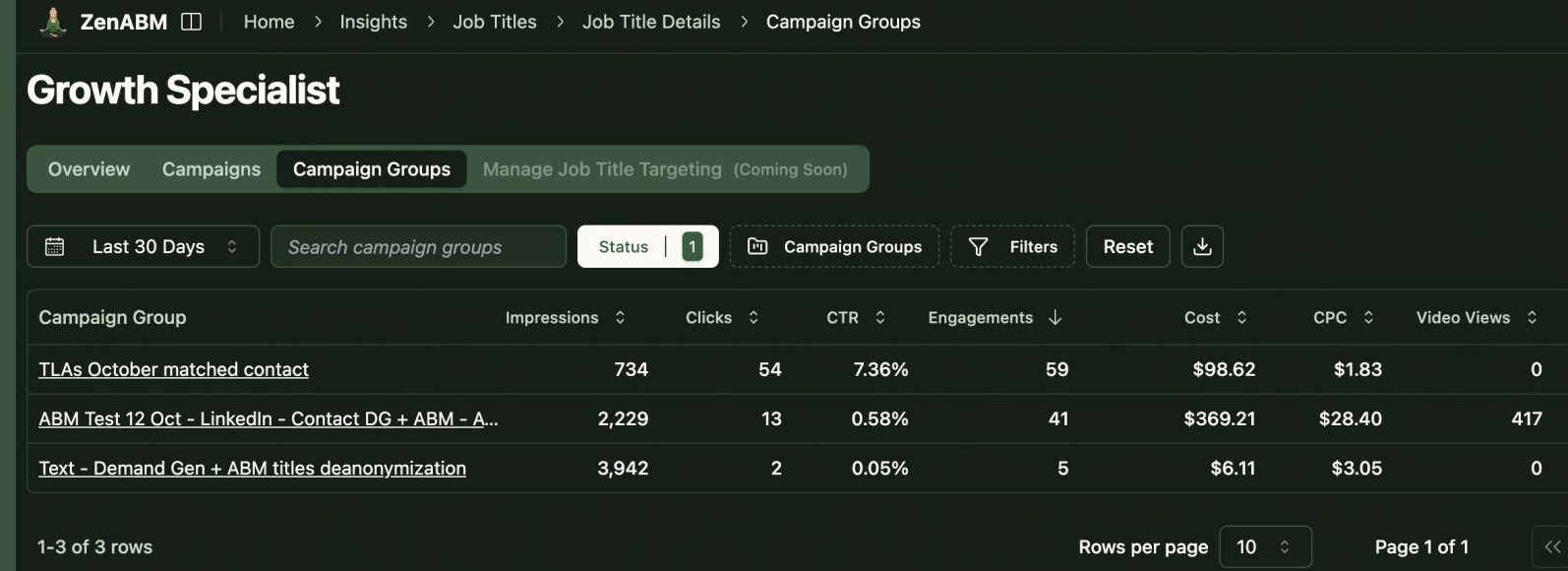
ZenABM shows job titles engaging with your creatives, plus dwell time and video funnel analytics.
ZenABM captures qualitative intent by showing which message themes and value props pulled a company in.
You can tag campaigns and creatives with themes like “security-led,” “integration-led,” or “ROI-driven,” and ZenABM associates accounts with those themes based on real engagement.
ZenABM also groups companies with similar intent so sales can reuse narrative patterns across clusters.
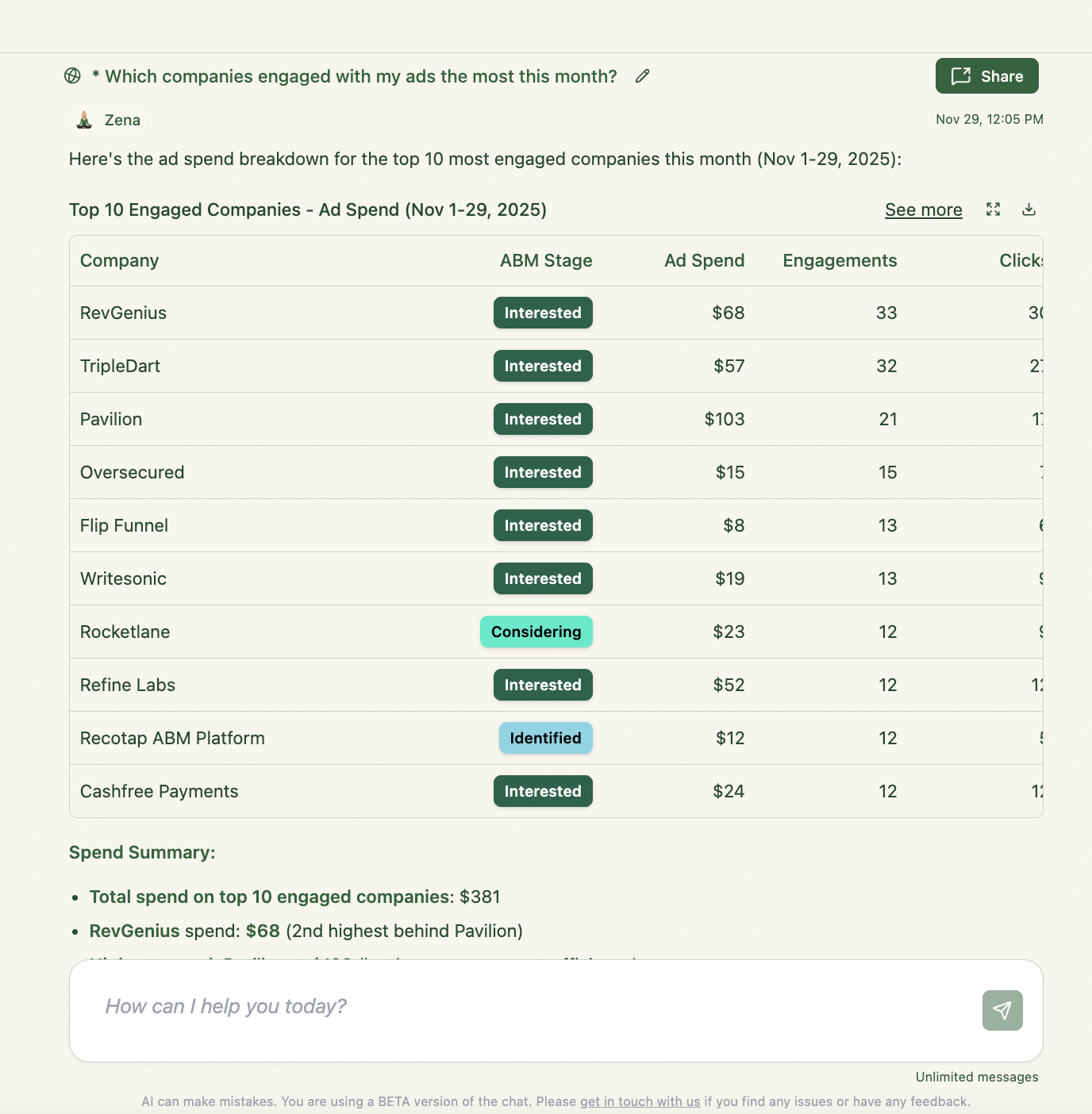
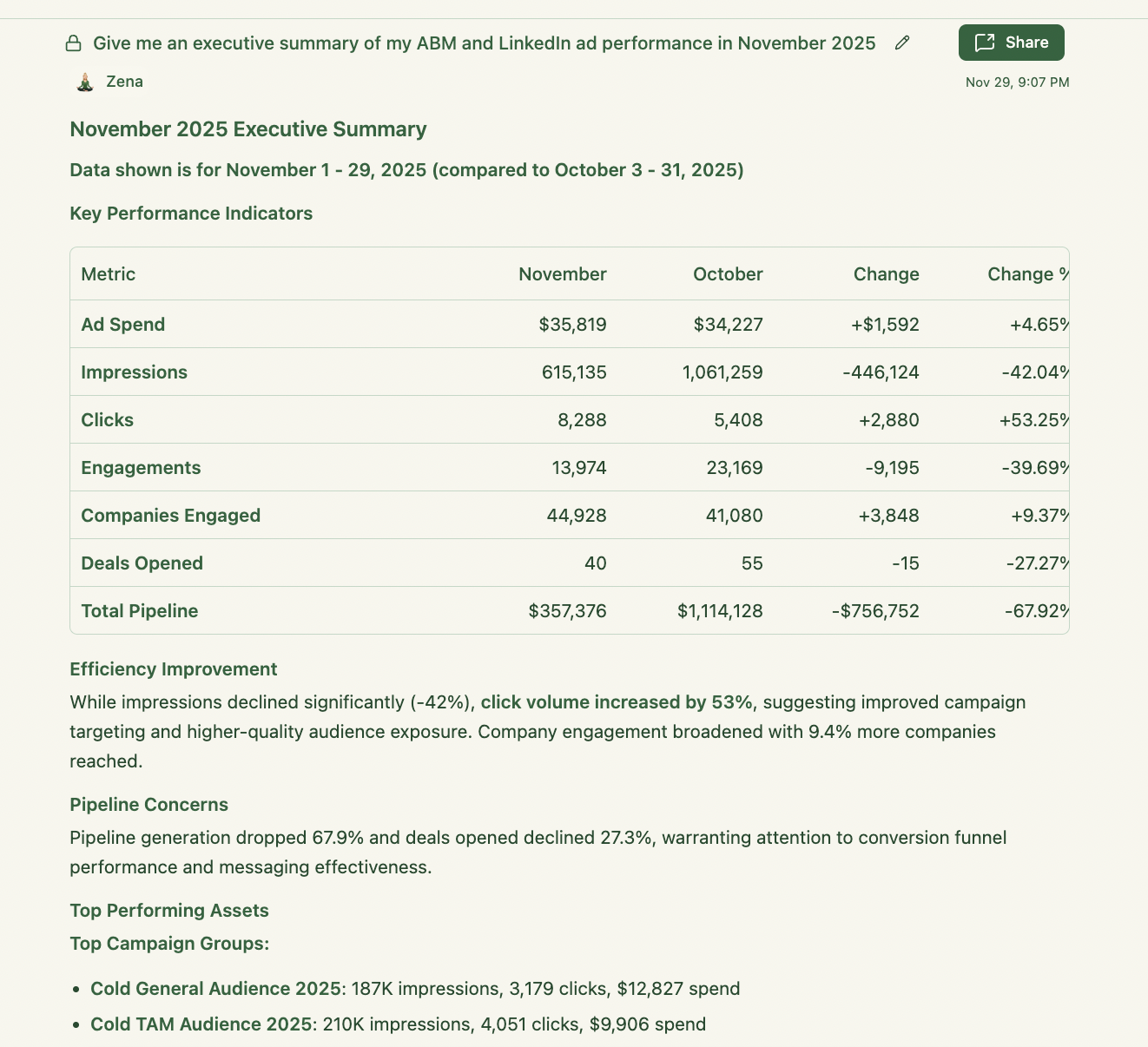
ZenABM includes its AI chatbot, Zena, which answers questions like a data analyst, using your LinkedIn engagement, spend, and CRM deal context.


ZenABM lets you group multiple LinkedIn campaigns into a single ABM “object,” so you can report performance across regions, personas, or creative clusters, without treating every campaign as an isolated unit.
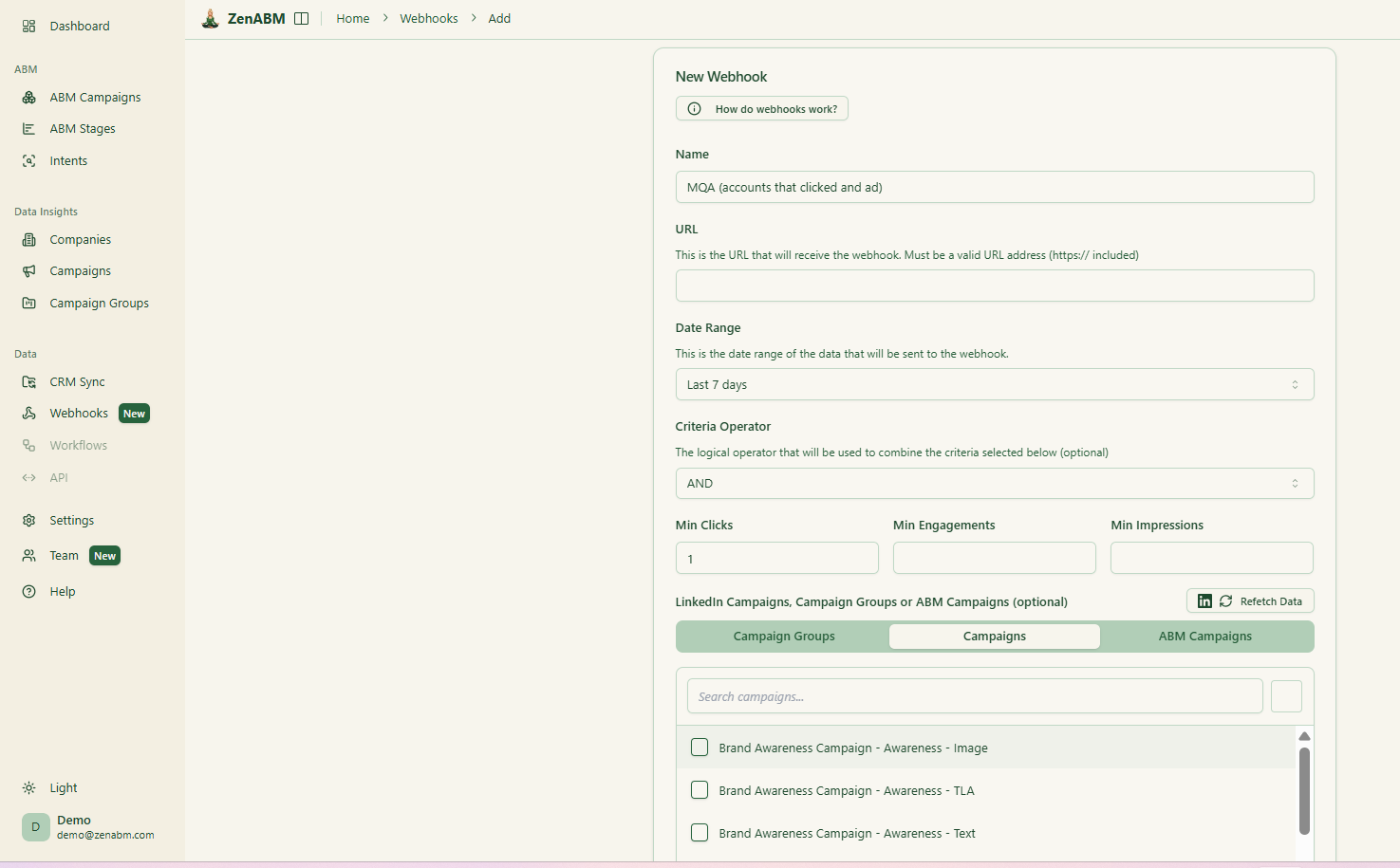
ZenABM includes a multi-client workspace for agencies and supports webhooks for Slack alerts and downstream ops automation.
If you want a broad orchestration suite with personalization baked in, Recotap is built for that category.
ZenABM is the better Recotap alternative when your team wants to stay lean and still run the LinkedIn-first ABM loop end-to-end, especially CRM activation and pipeline proof.
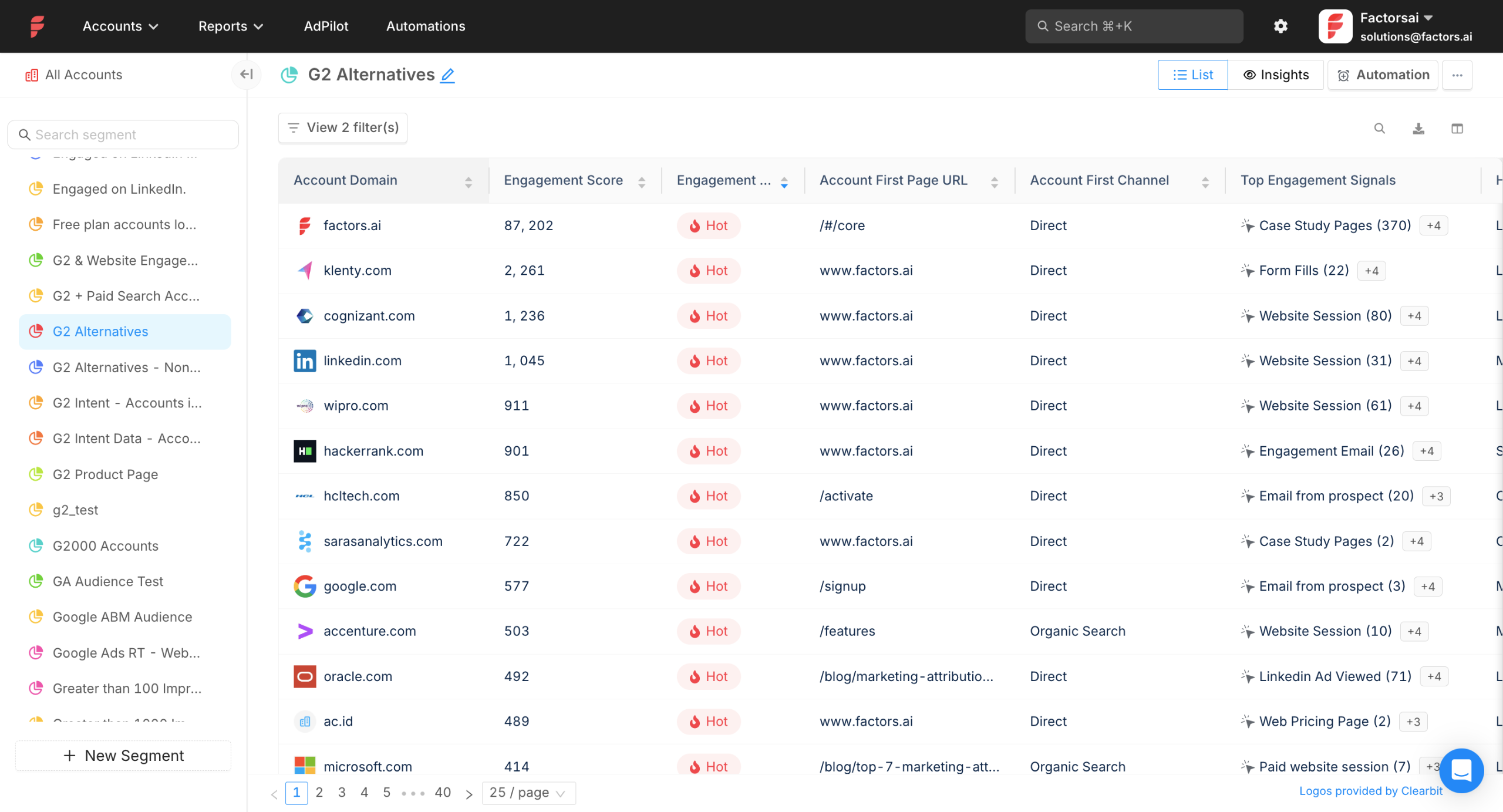
Best for: Teams that prioritize attribution depth, multi-channel journeys, and visitor identification.
Recotap is execution and orchestration forward.
Factors.ai is measurement and data stitching forward.
So if your stack problem is “we can run ABM, but we cannot prove impact cleanly across channels,” Factors.ai can be a stronger fit.
Factors.ai tracks touchpoints across channels (site, ads, email, CRM) and supports multiple attribution models, so you can defend ROI beyond last-click narratives.
It links anonymous visitors to companies using IP-based and partner-driven matching, which is useful for “who is on the site” workflows.
It enriches accounts with firmographics and uses engagement signals to create configurable scoring.
Factors.ai connects with major ad platforms, and its workflows can help operationalize audience management and optimization loops.
Factors.ai pricing is typically positioned above lightweight tools and below full enterprise ABM suites, and often lands in a higher annual range depending on configuration.
Factors.ai is not “ABM orchestration first.” It is a measurement and attribution brain.
If your main requirement is coordinated orchestration, segmentation, and personalization, Recotap is closer. If your requirement is cross-channel truth and attribution rigor, Factors.ai can win.

Best for: Teams that care most about multi-touch revenue attribution across the full journey.
If the main pressure is “prove pipeline and revenue impact,” Dreamdata is built for that job.
Recotap can provide suite-level reporting, but Dreamdata is specifically designed as a revenue attribution and journey analytics platform.
Dreamdata supports multiple attribution models and assembles timelines that connect marketing touchpoints to deals.
It rolls up pipeline and revenue performance by channel, campaign, and content, so you can answer executive questions without doing spreadsheet archaeology.
It can organize activity into account journeys and push audiences back to ad platforms for retargeting and optimization loops.
Dreamdata is not an orchestration suite. It is the reporting and attribution engine.
If the goal is ABM execution and personalization, Recotap is closer. If the goal is revenue proof across channels, Dreamdata is the better Recotap alternative.
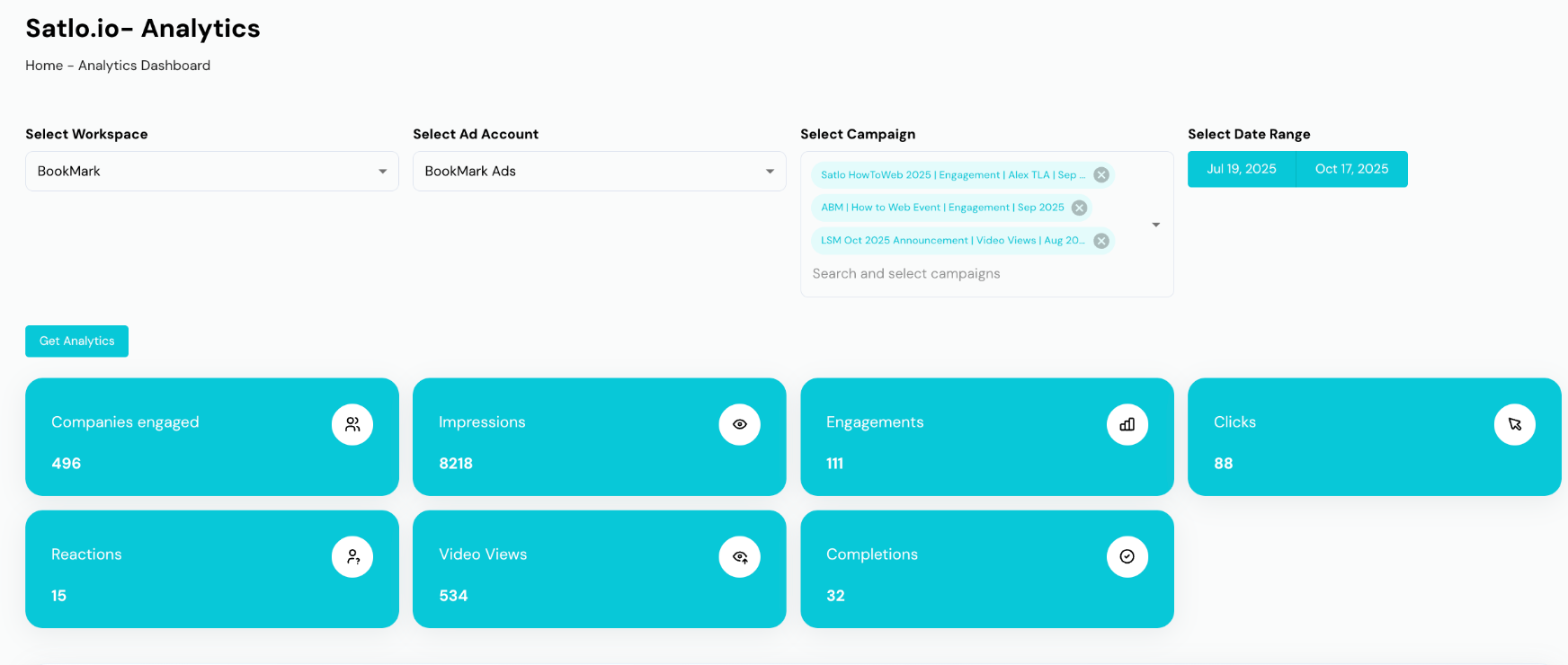
Best for: Teams that want company-level LinkedIn engagement dashboards and quick exports, without adopting a full ABM suite.
If Recotap feels like “too much platform” for your current stage, Satlo can be a clean reporting layer:
Satlo’s core offerings:
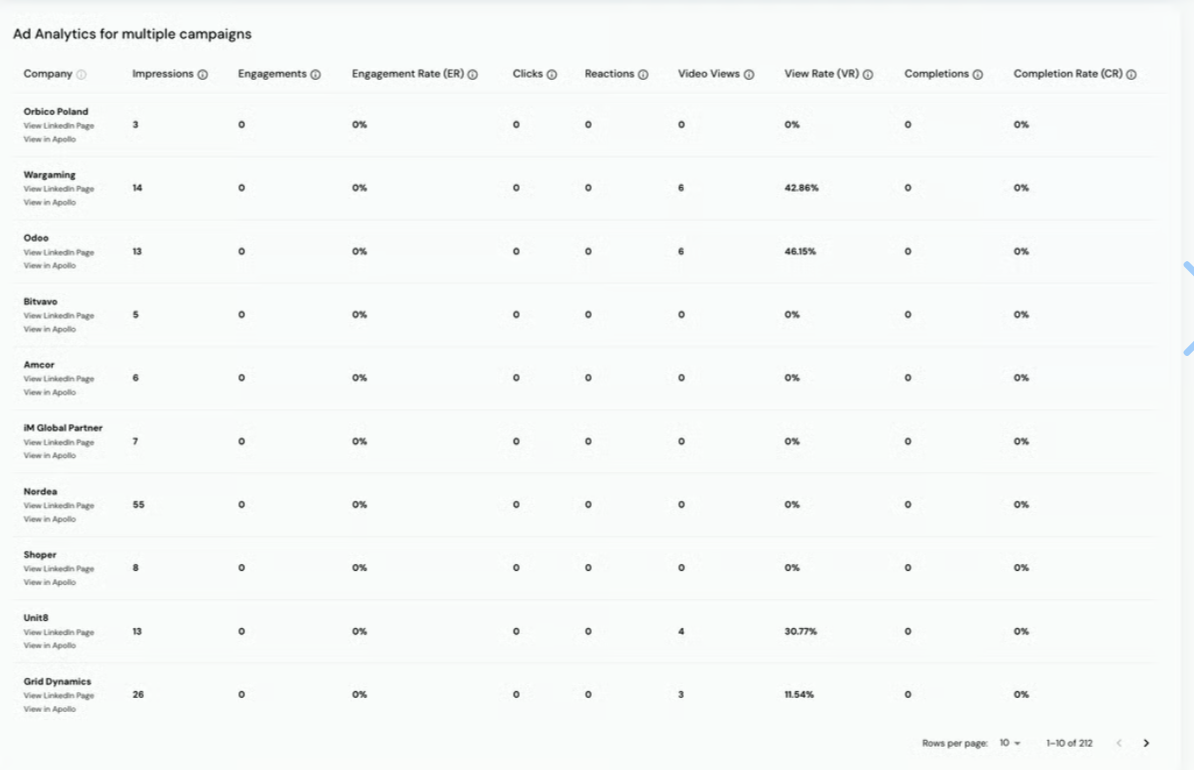
Satlo integrates with tools like HubSpot and can push engaged company lists into sales workflows.
It supports historical views, exports, and lightweight intent cues designed for fast analysis.
Satlo is not built to orchestrate ABM end-to-end. It is mainly a visibility layer.
If you need orchestration plus personalization, Recotap is closer. If you just want “who is engaging on LinkedIn,” Satlo can be enough.

Best for: Teams that want strict LinkedIn delivery control, including scheduling, pacing, and impression distribution discipline.
Recotap is an ABM suite.
Linklo is a control layer.
If your pain is “LinkedIn delivery behaves unpredictably,” Linklo is a practical alternative to buying more platform than you need.
Linklo’s core offerings:
Linklo does not try to be an ABM suite. It is best as a focused ops companion paired with an insights and activation layer (ZenABM, Satlo, or similar).
Best for: Teams that want LinkedIn control plus optional visitor identification and can live with IP/cookie-based matching.
If you are not buying Recotap for orchestration, and you mainly need tighter LinkedIn ops (plus basic “who visited” workflows), DemandSense can cover that lane.
DemandSense’s core offerings:
It emphasizes control over when campaigns run and how often audiences are hit.

Higher tiers can include a visitor ID module that uses IP and cookies to identify site visitors at the company level.
It is not an orchestration suite, and visitor ID accuracy depends on matching reliability.
If you need suite-level segmentation and personalization, Recotap fits better. If you want cheaper ops control with a visitor ID option, DemandSense is the practical pick.
Best for: Agencies and advertisers that want monitoring, alerts, and optimization nudges without living inside Campaign Manager.
If your real pain is “we miss issues early and waste spend,” a monitoring tool can beat a platform upgrade.
Campainless keeps an eye on LinkedIn performance and flags problems fast.
Campainless’s core offerings:
Campainless is not trying to orchestrate ABM. It is ops vigilance.
If you want segmentation, personalization, and multi-signal intent orchestration, Recotap fits better.
If you want fewer firefights and faster detection, Campainless is the simpler win.
Recotap is a strong ABM suite when you actually need orchestration, multi-signal intent, segmentation, and personalization in one place.
But a lot of LinkedIn-first ABM teams do not fail because they lack a suite. They fail because the stack does not close the loop:
That’s why the most suitable Recotap alternative depends on what you are trying to replace:
Try ZenABM now (37-day free trial), or book a demo to know more!