


In this guide, I compare N.Rich vs. Demandbase on features, pricing and ABM fit so marketing and sales can quickly see which one matches their motion.
I also show how ZenABM can act as a lean, LinkedIn-first alternative or sit beside them as a lighter ABM analytics layer.

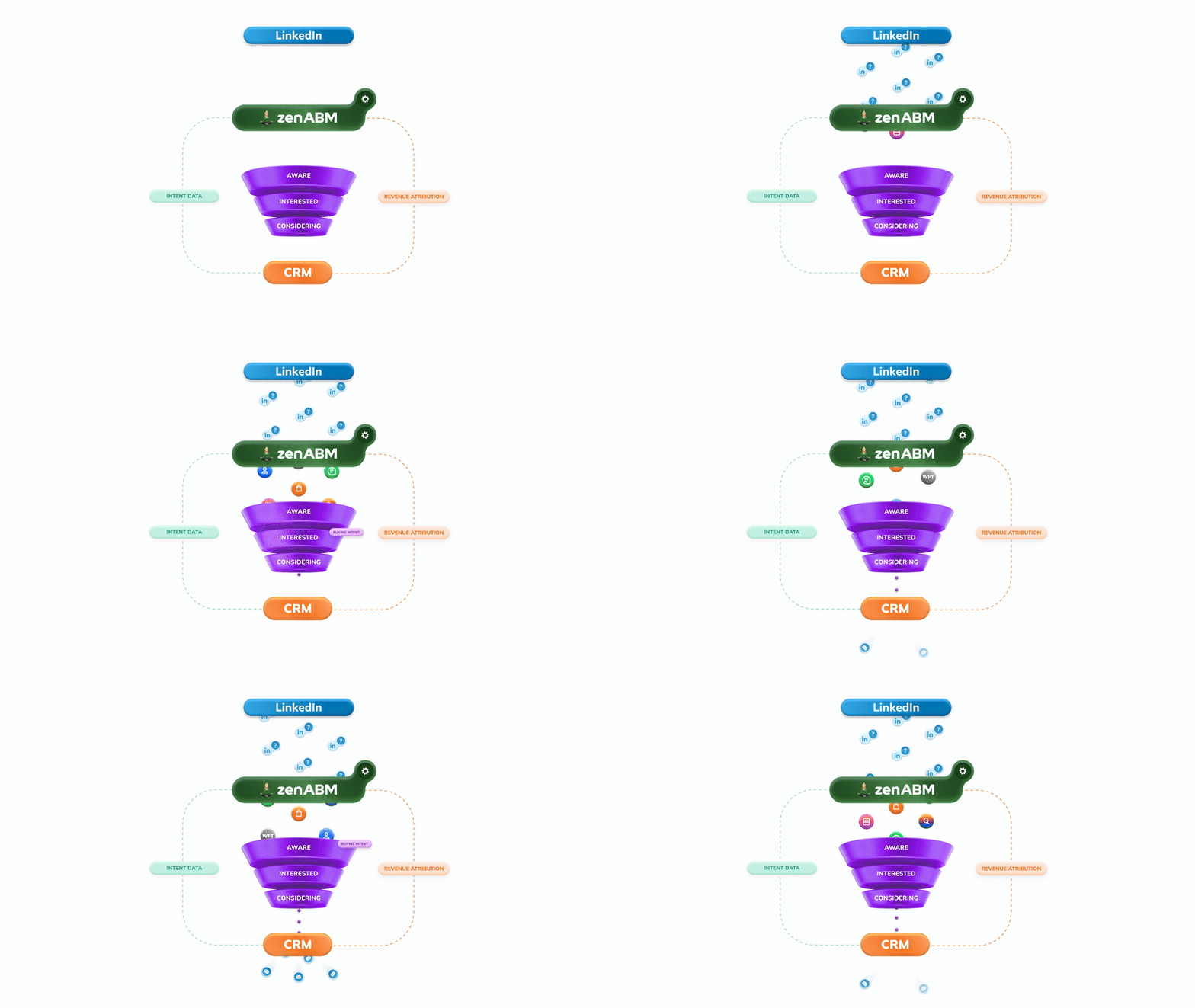
In case you’re short on time, here is the snapshot:
| Aspect | N.Rich | Demandbase | ZenABM (Alternative) |
|---|---|---|---|
| Core Positioning | ABM execution layer built on a B2B DSP | Full ABM suite with multi-channel ads, intent, web personalization | LinkedIn-first ABM platform for account-level engagement & pipeline |
| Target Account Method | CRM-driven ICP models & dynamic scoring | Firmographics, technographics & large third-party intent graph | First-party LinkedIn engagement, account scoring & ABM stages |
| Primary Channels | Programmatic display & video with limited LinkedIn alignment | Native DSP for display, retargeting, CTV + LinkedIn & social ads | LinkedIn only (first-party API data) |
| Intent Model | First-party + third-party topic intent | Large scale third-party topic intent blended with first-party data | First-party qualitative intent from LinkedIn ads |
| Analytics & Attribution | Account-level analytics, opportunity attribution, Sales Velocity Score | Pipeline influence, buying groups, journey analytics & prediction | ROAS dashboard, pipeline per dollar, ABM stages, engagement scoring |
| Web Personalization | No | Personalized pages, modules, dynamic content | No |
| Buying Committee Mapping | Account centric | Full buying group discovery & people-based targeting | Job title analytics only |
| Integrations | Salesforce, HubSpot, MAPs, LinkedIn | Deep CRM, MAP, SEP & analytics integrations | Bi-directional HubSpot & Salesforce, webhooks for Clay/Apollo |
| Pricing | $10.3K–$23.8K/yr, Enterprise custom | Median ~$65K/yr, ranges $18K–$300K+ | $59–$399/mo (Agency $479/mo) |
| Best Fit | Teams wanting intent-driven programmatic ABM without a full suite | Mature ABM programs needing an end-to-end operating system | LinkedIn-heavy teams needing first-party insight & pipeline analytics |
N.Rich positions itself as an agile ABM execution layer for mid-market and enterprise teams, built on a B2B DSP with intent, ICP and ABM workflows.
Core N.Rich capabilities include ICP building, intent scoring, programmatic campaigns and account-level analytics.

N.Rich pulls CRM opportunity data to learn what winning customers look like, then scores new accounts against that pattern.
You can build target lists using filters such as industry, employee count and tech stack so account selection relies less on gut feel and more on data, as long as CRM quality is solid.


N.Rich combines first-party behavior (site visits, ad engagement) with third-party intent feeds to flag accounts researching key topics.
Accounts get intent scores so marketing and sales can focus effort on the warmest, consent based interest, while topic data syncs into your CRM for fast follow up.
N.Rich ships with a built in DSP to run programmatic display to target accounts and supports native and video formats.
You can connect LinkedIn Ads so display and LinkedIn campaigns stay loosely aligned, with a simple campaign builder that supports bulk creative uploads and A/B tests.

N.Rich gives account-level analytics that tie engagement to pipeline and revenue. Its Opportunity Attribution dashboard links impressions, clicks and visits to opportunities and closed deals.


It also calculates an ICP Sales Velocity Score per account and can sync those metrics back to your CRM on higher tiers.
N.Rich connects to common CRMs and marketing tools. Native integrations include Salesforce, HubSpot (Marketing and Sales Hub) and LinkedIn ads.

N.Rich uses tiered pricing tied to team size and ABM maturity, with all plans centered on turning intent data into revenue.
For smaller teams trialing intent-driven ABM.
Includes 1 intent report, 10 topics, 1 marketing seat, 3 sales seats, 1 N.Rich account, 1 ABM campaign, chat support, plus:
For teams scaling ABM and tightening alignment between sales and marketing.
Includes everything in LITE, plus:
For global, mature ABM programs with complex orchestration needs.
Includes everything in GROWTH, plus:
Note: because N.Rich starts above $10K per year, ZenABM often looks leaner for LinkedIn first teams, starting at ~$59/month with the top tier still under $6K per year. You still get core LinkedIn ABM essentials: account-level ad engagement tracking, account scoring, ABM stage tracking, hot account routing, bi-directional CRM sync, custom webhooks, qualitative intent and plug and play ROI dashboards.
N.Rich scores 4.7 out of 5 on G2 (around 99 reviews), which signals strong overall satisfaction.

Across G2, TrustRadius, Reddit and similar sites, a few clear themes show up.


Demandbase functions as a comprehensive ABM platform that covers everything from building target account lists to running multi-channel advertising and customizing on-site experiences.
Its broad toolkit lets teams replace several point tools with one system, which can reduce operational friction.
Demandbase also unifies account and contact data to strengthen sales intelligence, enrichment and outbound strategy so ABM execution becomes more coordinated.
Key Demandbase capabilities explained:
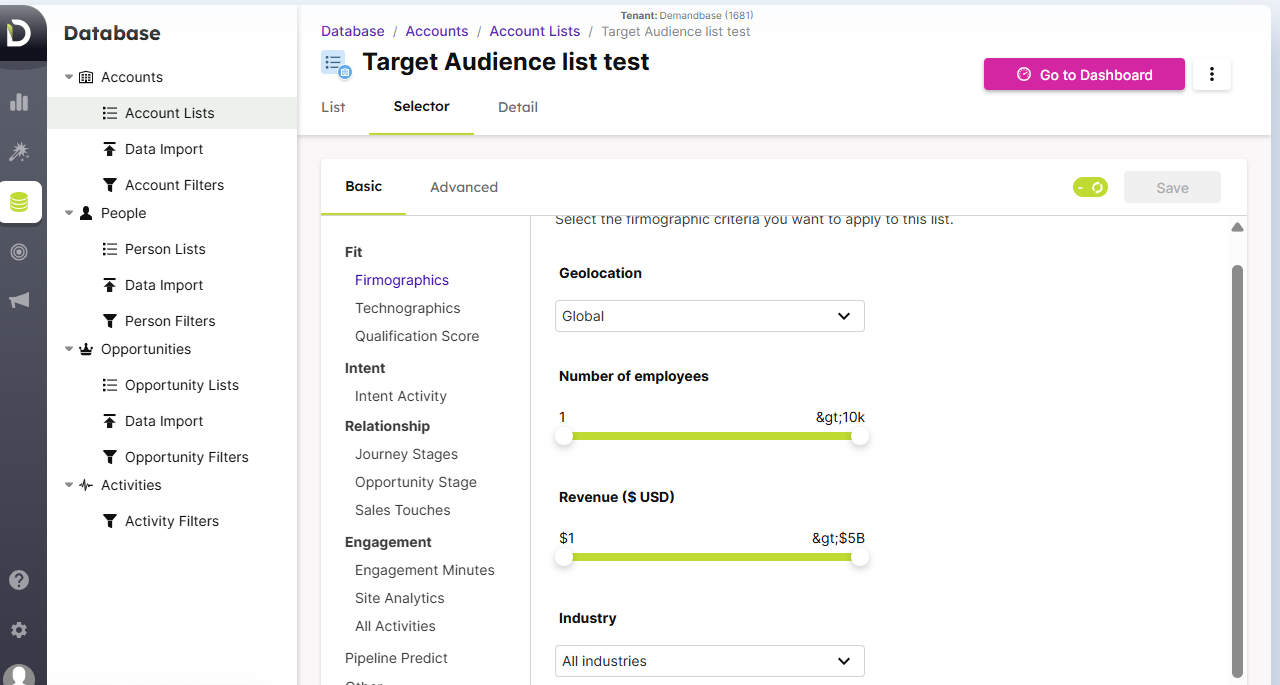
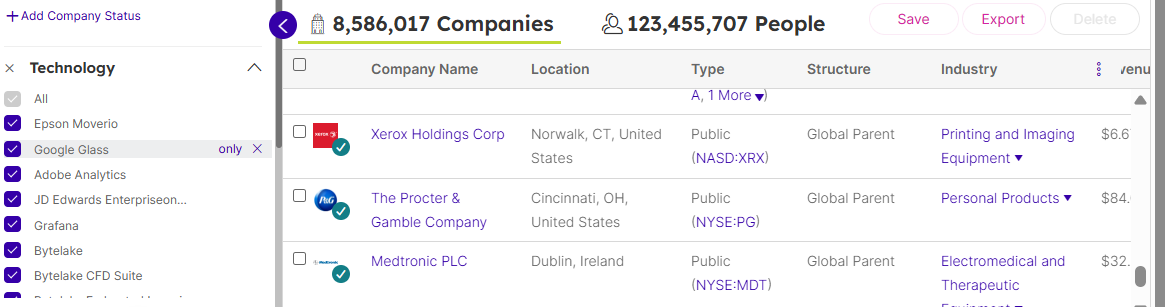
Demandbase helps you create and tune target account lists by combining first-party and third-party data, with AI suggestions that factor in firmographics, technographics and intent signals.
This helps larger organizations quickly identify which accounts deserve priority.
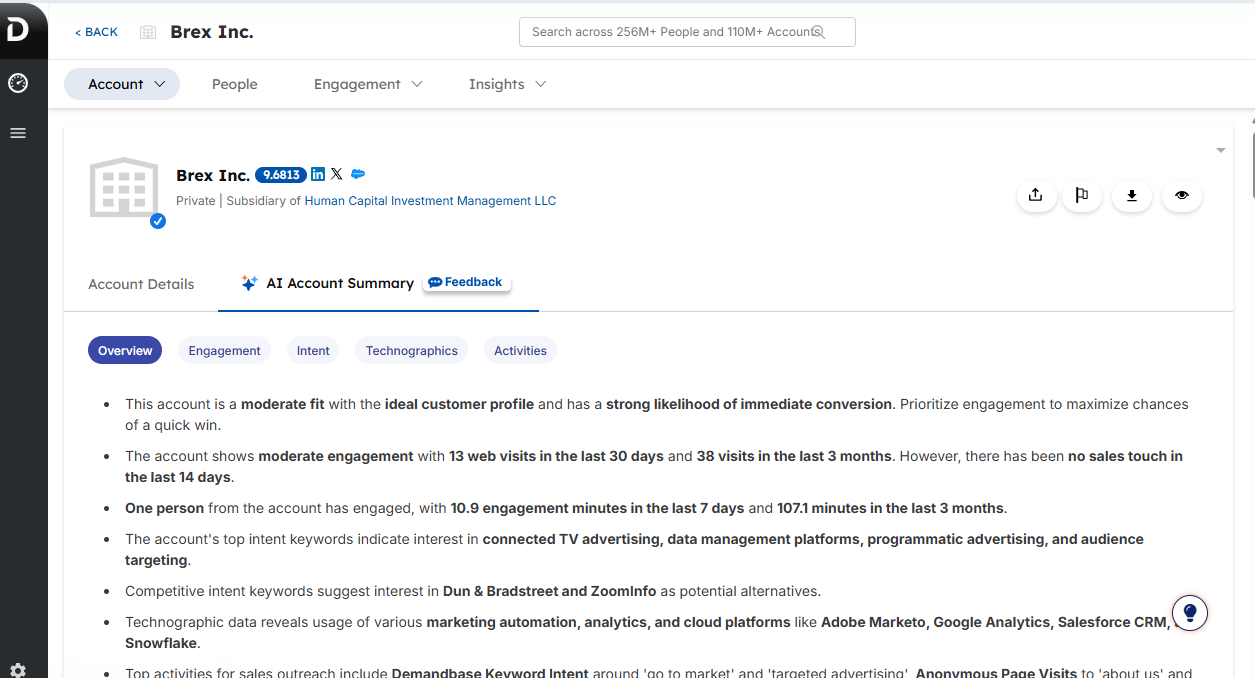
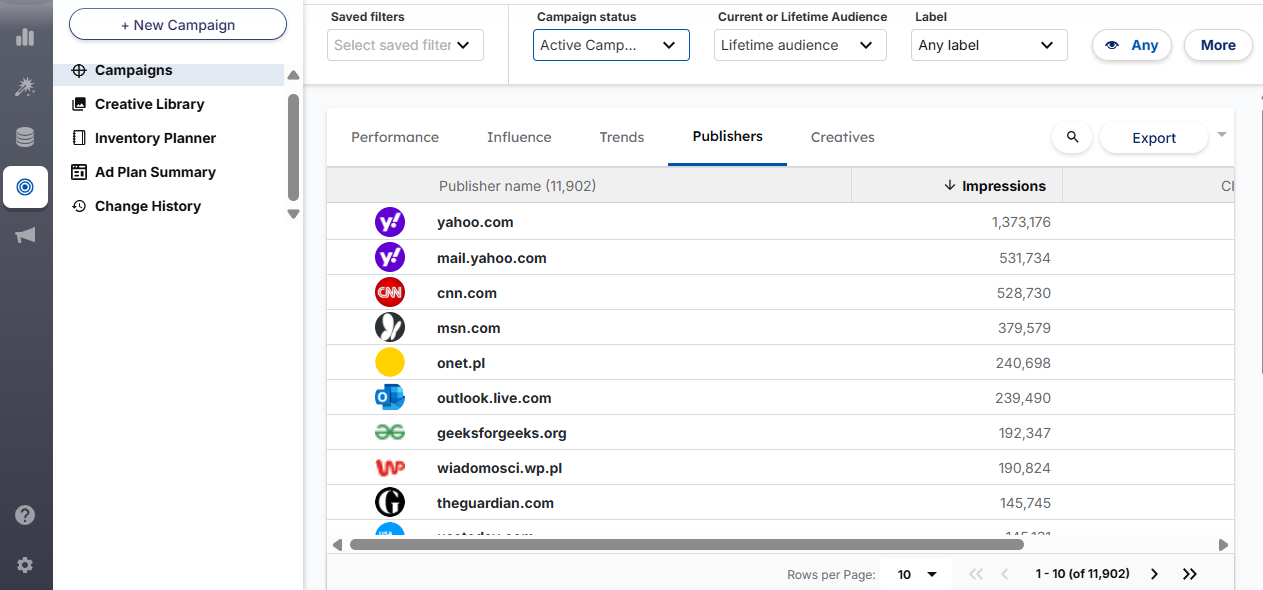
Demandbase includes a native programmatic engine so you can run display, retargeting, native and Connected TV campaigns from one place. The DSP uses intent data to reach high value audiences more precisely.
It also connects to major social networks. You can manage LinkedIn, Facebook, Twitter and YouTube within Demandbase, set account level frequency caps and use AI to optimize budgets.
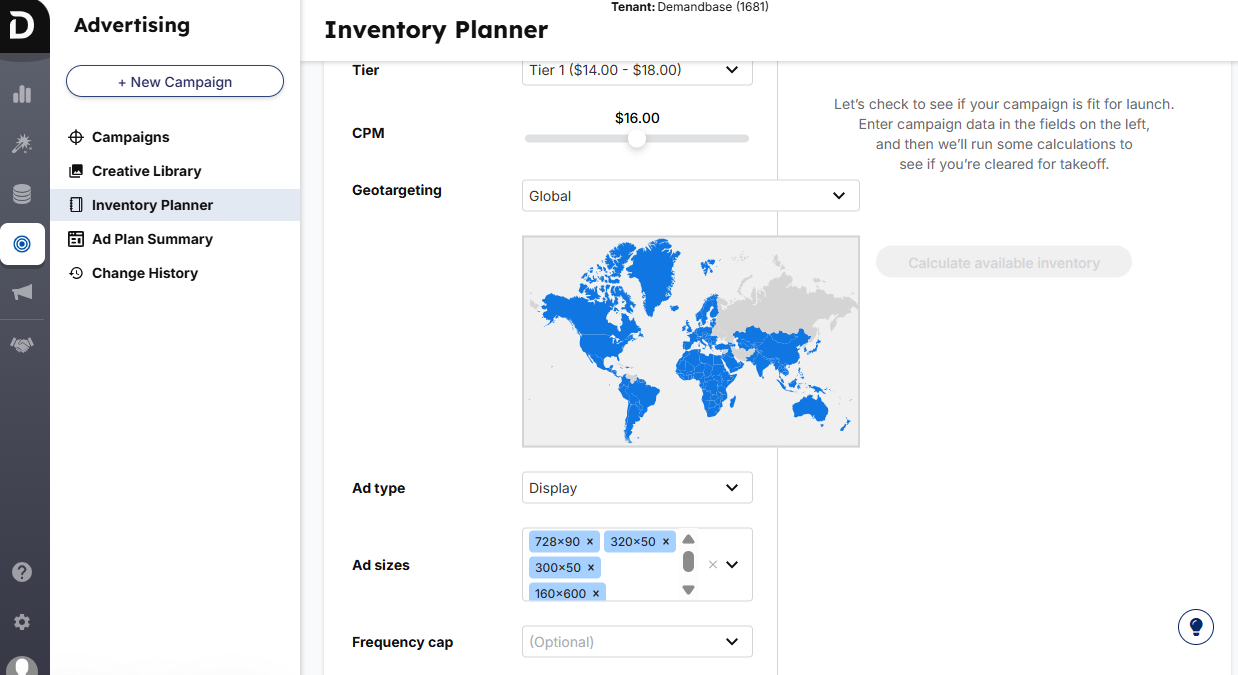
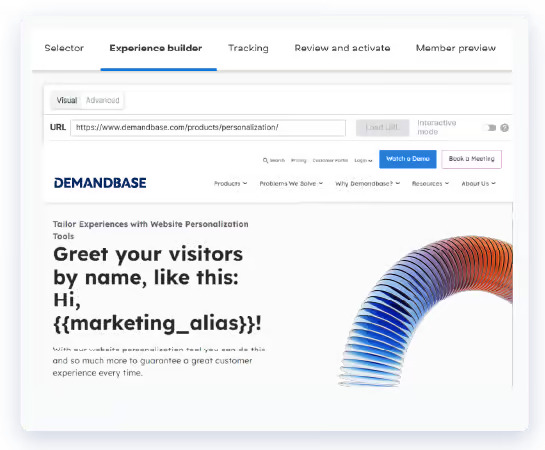
Demandbase supports personalized site experiences for target accounts.
You can create account specific pages or dynamic modules such as greetings or offers tied to industry or funnel stage.
Demandbase pulls in third-party intent across more than 62,500 B2B topics and blends it with first-party engagement.
That lets Demandbase surface target accounts that are “surging” on relevant themes via providers like Bombora, along with how those accounts interact with your assets.
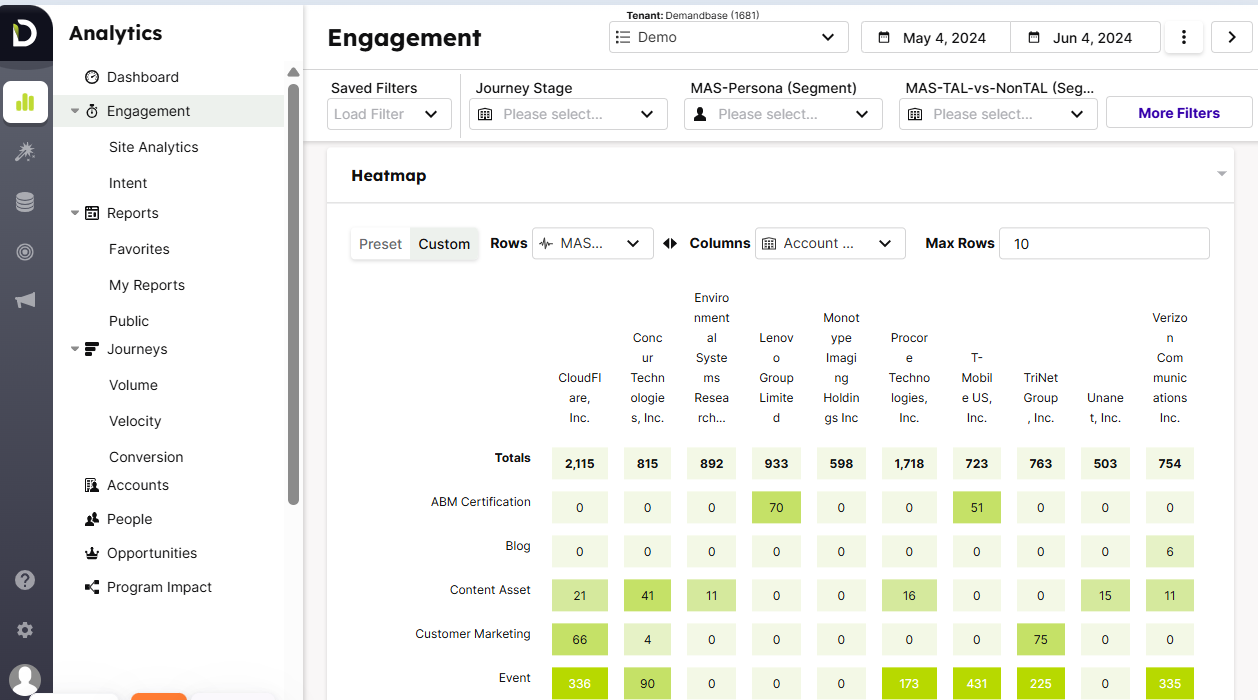
You also get heatmaps and engagement scores across channels, plus predictive analytics to highlight likely in market accounts and guide sales and marketing focus.
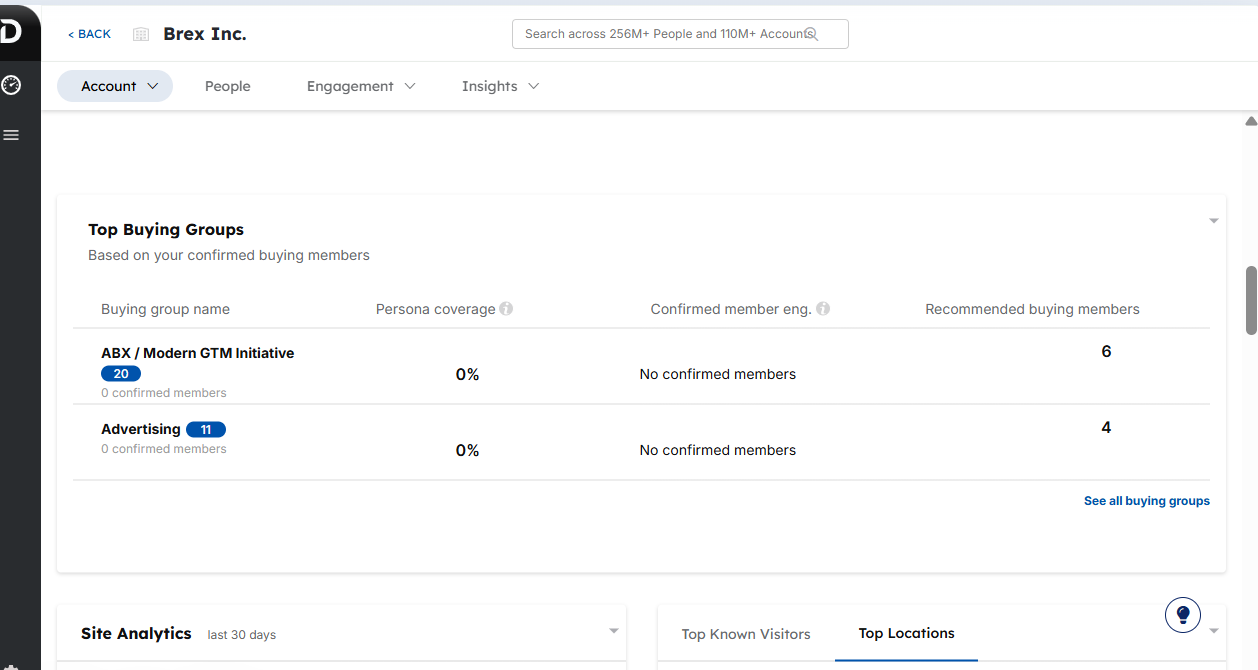
The platform builds buying committees by finding and targeting decision makers at each account so you can focus ads and sales motions on the right roles.
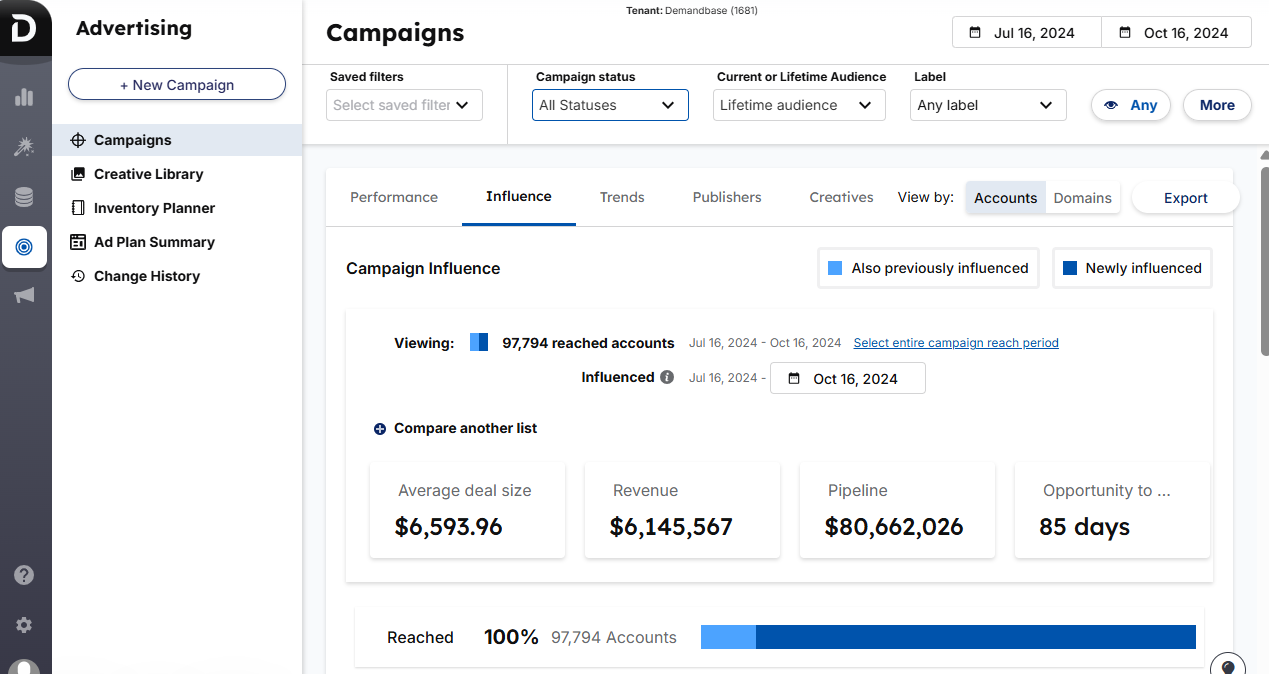
Demandbase provides robust reporting to measure account engagement, campaign influence on pipeline and revenue attribution across the full journey.
AI models estimate likely pipeline outcomes and highlight where reps should focus to improve win probability.
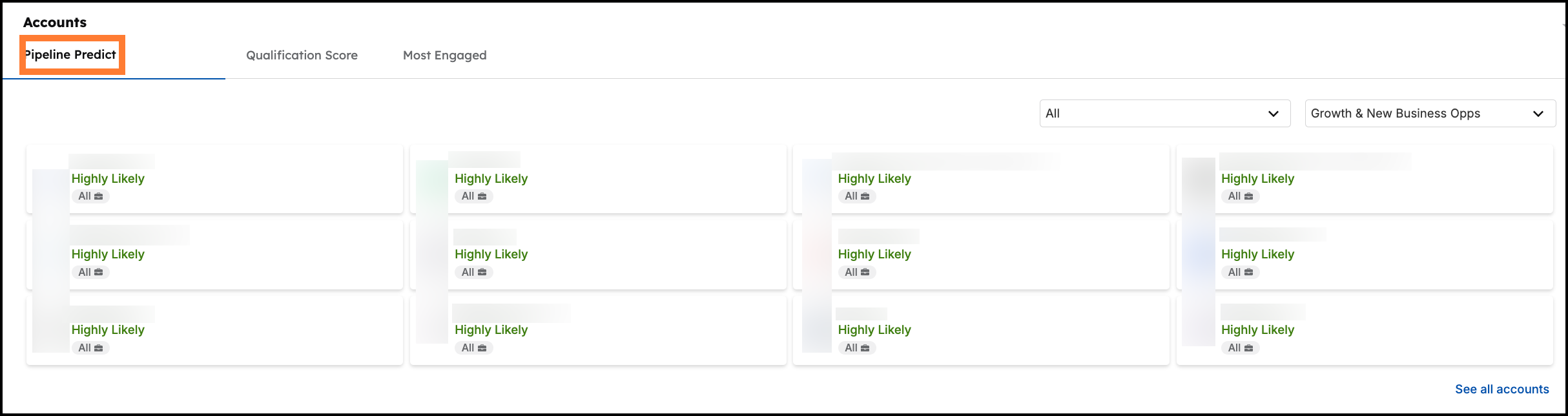
Remember: someone still needs to own and maintain these dashboards for them to keep reflecting reality.
Demandbase integrates with leading CRMs like Salesforce, marketing automation platforms (MAPs) and sales tools so account insights flow into sales workflows, for example via a Salesforce component that shows engagement. It also connects with sales engagement tools like Outreach and Salesloft.
This alignment helps marketing and sales operate from a shared account view.
For the full catalog, see the Demandbase official docs.
Demandbase does not publish list prices and usually offers custom enterprise packages after a sales conversation.
Most deals combine a platform fee with per-seat pricing, rising with team size and usage such as engaged account volume or activity levels.
According to industry references:
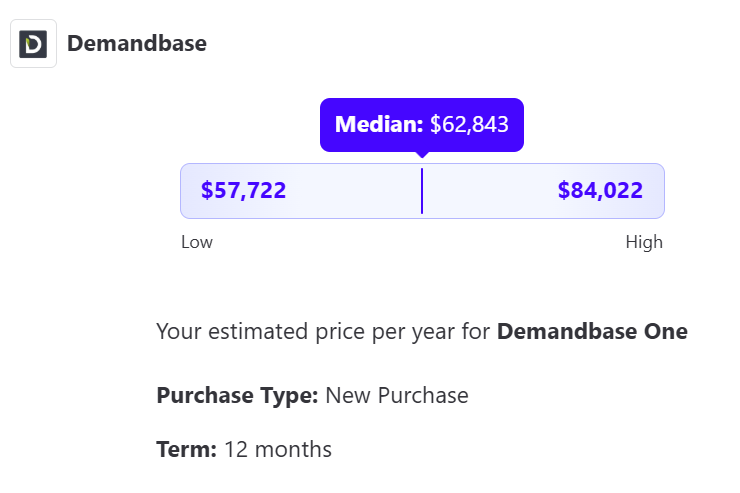
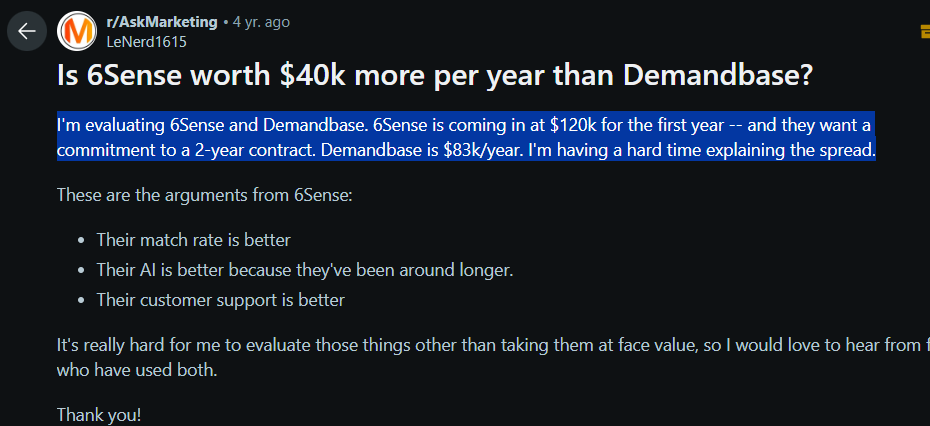
When reviewing quotes, external benchmarks help you keep pricing realistic and avoid overbuying.
Optional add-ons, such as extra intent data or sales intelligence databases, can increase the bill.
Because of its breadth, many small businesses find Demandbase more than they need and risk paying for modules that stay idle.
In short, Demandbase suits teams with sizable ABM budgets and a mature program in place.
Users have these complaints against Demandbase One on G2:
The key differences between N.Rich vs. Demandbase are tabulated here.
| Aspect | N.Rich | Demandbase | Best suited for |
|---|---|---|---|
| Core positioning | ABM execution layer on a B2B DSP with ICP, intent and programmatic workflows | Comprehensive ABM platform covering targeting, ads, web personalization and analytics | Teams choosing between a focused execution engine and an all-in-one ABM suite |
| Target account building | Uses CRM opportunity data to build dynamic ICP models and score target accounts | Combines firmographics, technographics and AI-driven intent to suggest and refine target lists | Whether you prefer CRM driven ICP modeling or broader data-driven account discovery |
| Primary channel focus | Programmatic display and video with LinkedIn campaign alignment | Native DSP for display, retargeting and CTV plus management of LinkedIn and other social channels | Stacks focused mainly on programmatic vs full multi-channel advertising |
| Intent model | Blends first-party behavior with third-party intent feeds to score accounts | Ingests large-scale third-party topic intent and mixes it with first-party engagement | Teams deciding between classic topic intent and a broader third party heavy intent graph |
| Web and personalization | No native web personalization engine, relies on integrations for on-site experiences | Supports personalized pages and modules for target accounts based on segment and stage | Whether website personalization is a core requirement or a nice to have |
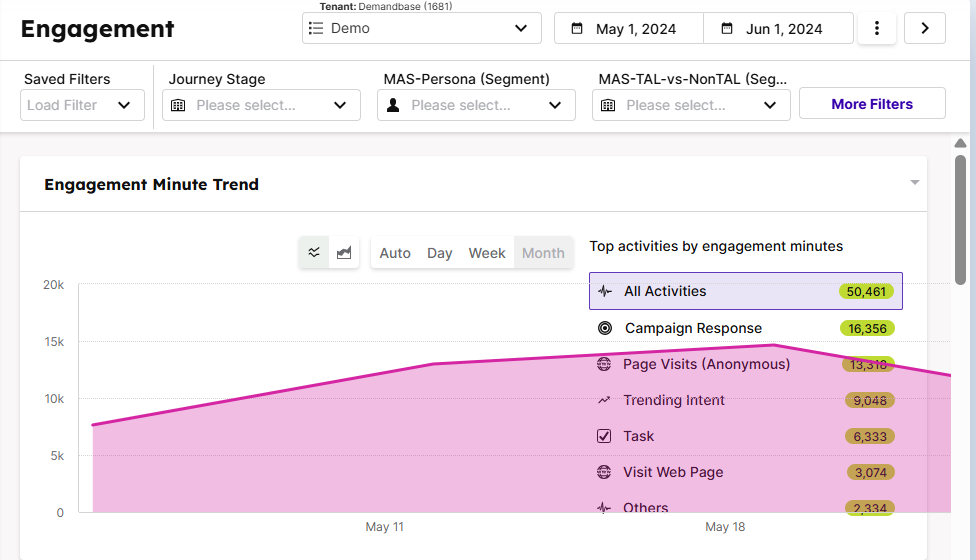
| Engagement views | Account-level analytics, opportunity attribution and ICP Sales Velocity Score | Account overviews, heatmaps, engagement minutes and buying committee views | Teams wanting concise account metrics vs richer journey and committee visuals |
| Attribution and analytics | Opportunity attribution that links impressions and clicks to opportunities and deals | Robust attribution and campaign dashboards that show pipeline influence and revenue impact | ABM teams choosing between focused campaign attribution and broad journey reporting |
| People and buying groups | Account centric reporting with less emphasis on buying committee discovery | Builds buying groups and supports people based targeting within key accounts | Orgs that are more account level vs those that are buying group centric |
| Integrations | Salesforce, HubSpot, LinkedIn and MAP integrations | Deep connectors across CRM, MAP, sales engagement, analytics and sales intelligence | Stacks needing a small set of core integrations vs a broad ecosystem hub |
| Pricing level | Premium pricing starting around 10,320 USD per year, Growth near 23,800 USD, Enterprise custom | Enterprise pricing with a median near 65,000 USD per year and large rollouts reaching six figures | Budgets that can support premium vs full enterprise ABM spend |
| Complexity and adoption | Requires onboarding and ops support but has a narrower surface area | Steep learning curve, more modules to configure and longer onboarding for full value | Teams wanting a lighter execution layer vs orgs ready for a major platform rollout |
| ABM breadth | Covers ICP, intent, DSP campaigns and account analytics | Covers end-to-end ABM from account selection and ads to web personalization and reporting | Companies choosing between an ABM media engine and a full ABM operating system |
After we have discussed N.Rich vs. Demandbase for ABM, let’s visit the third option: ZenABM.
ZenABM is built for teams that rely on LinkedIn as the primary ABM channel and want first-party accuracy, automation, and revenue visibility without the price or complexity of multi-channel suites.
Let’s look at its core features:
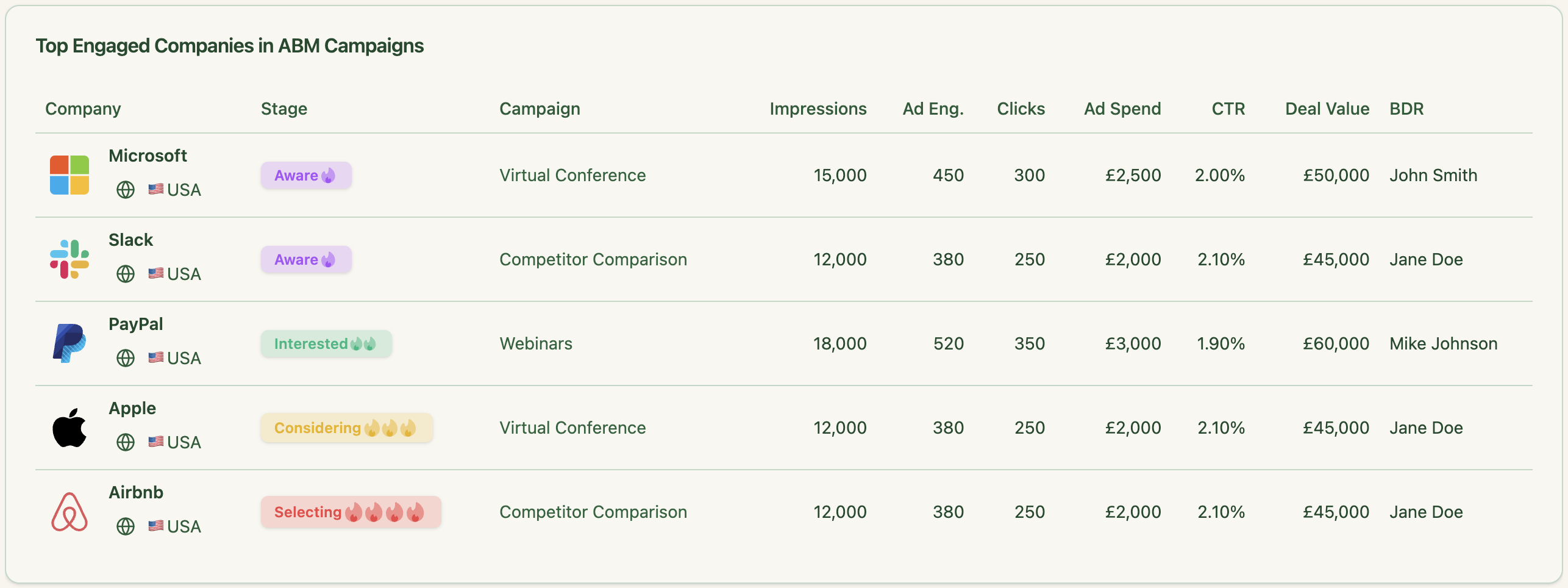
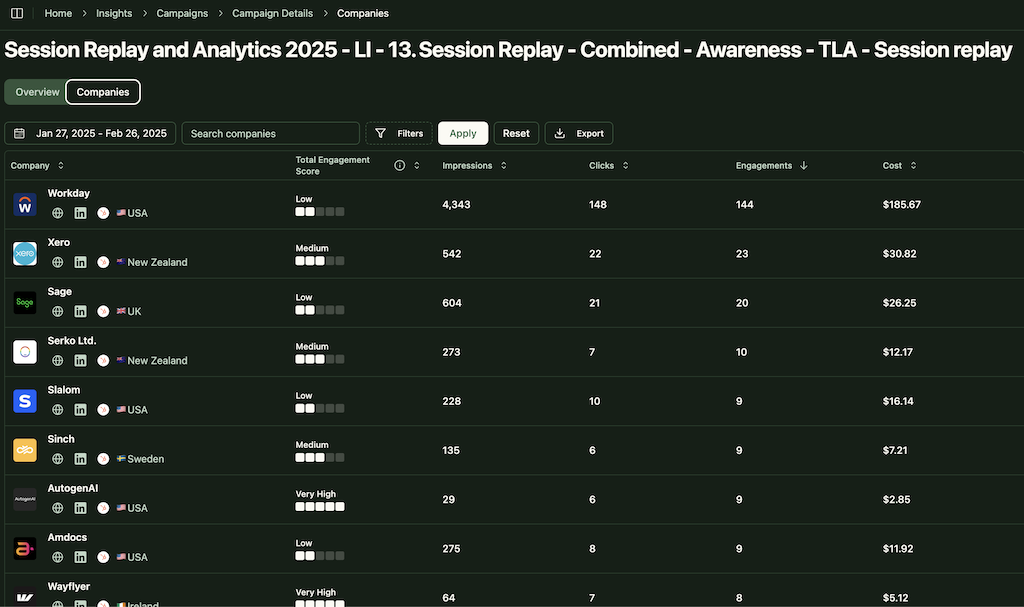
ZenABM connects to the official LinkedIn Ads API and captures account-level data for all campaigns so you can see which companies see, click, and engage with your ads.
Because this is first-party data from LinkedIn’s environment, it is more reliable than IP or cookie-based visitor ID.
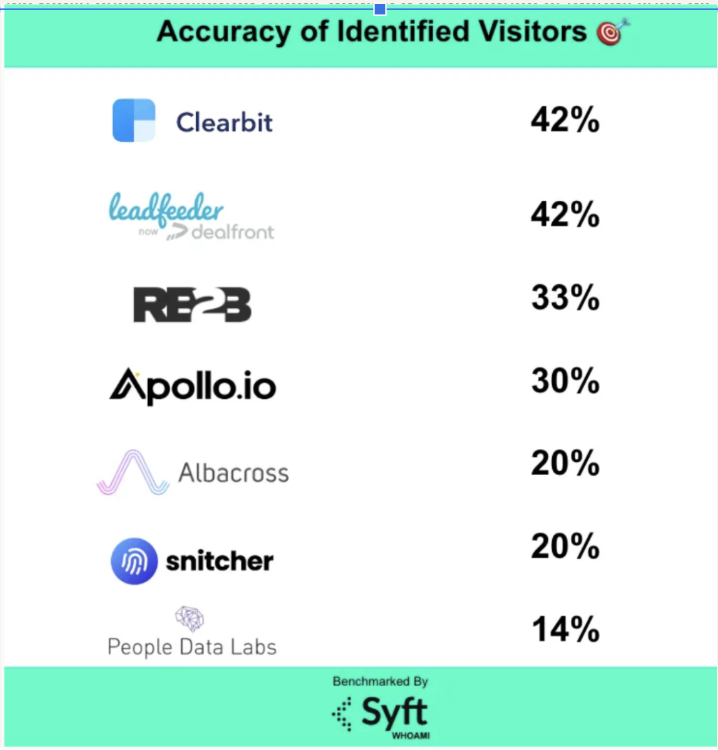
A Syft study puts IP-based identification at around 42 percent accuracy.
ZenABM treats LinkedIn ad engagement itself as first-party intent. When several people in one company keep engaging with your ads, that is a strong buying signal without rented intent feeds.
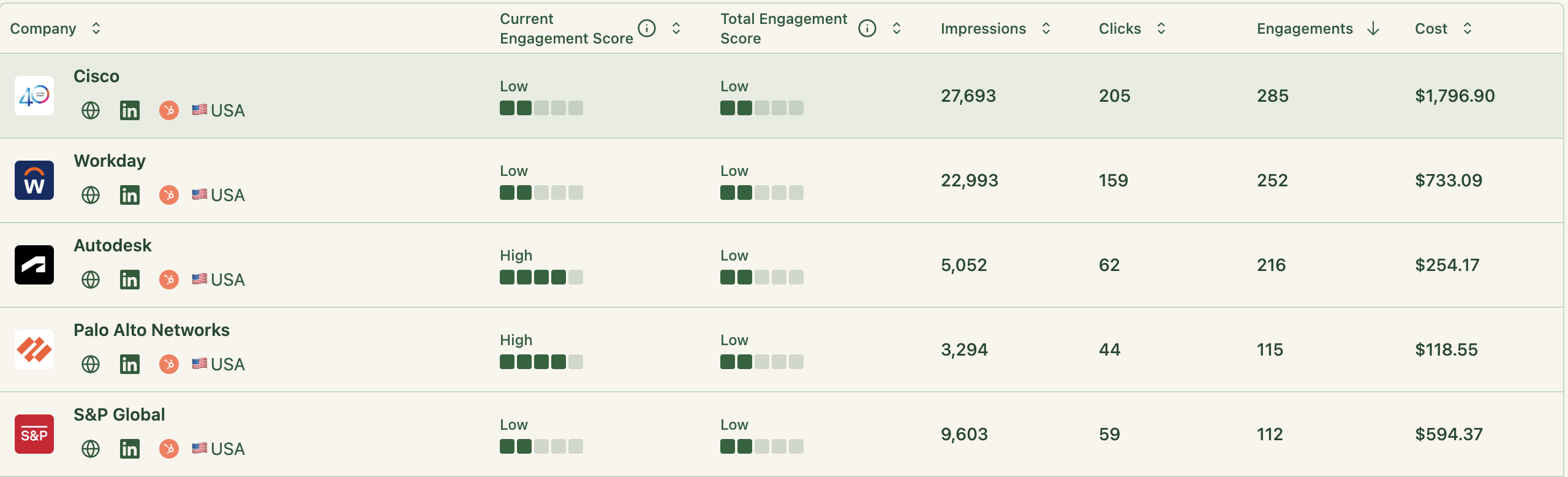
ZenABM updates engagement scores as accounts interact with your ads across campaigns, so you can see who is heating up over short or long windows and let marketing and sales prioritize accounts that show real intent.
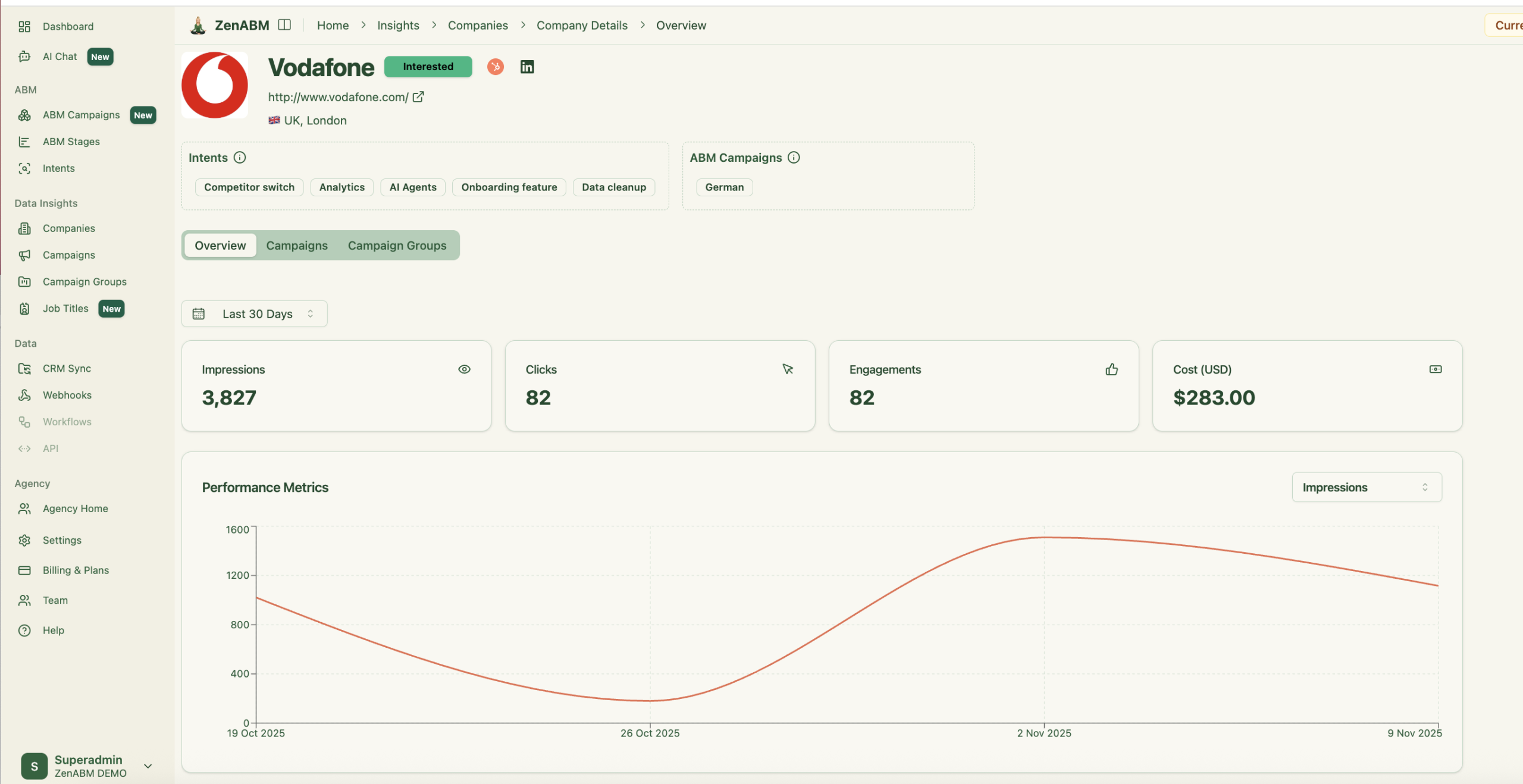
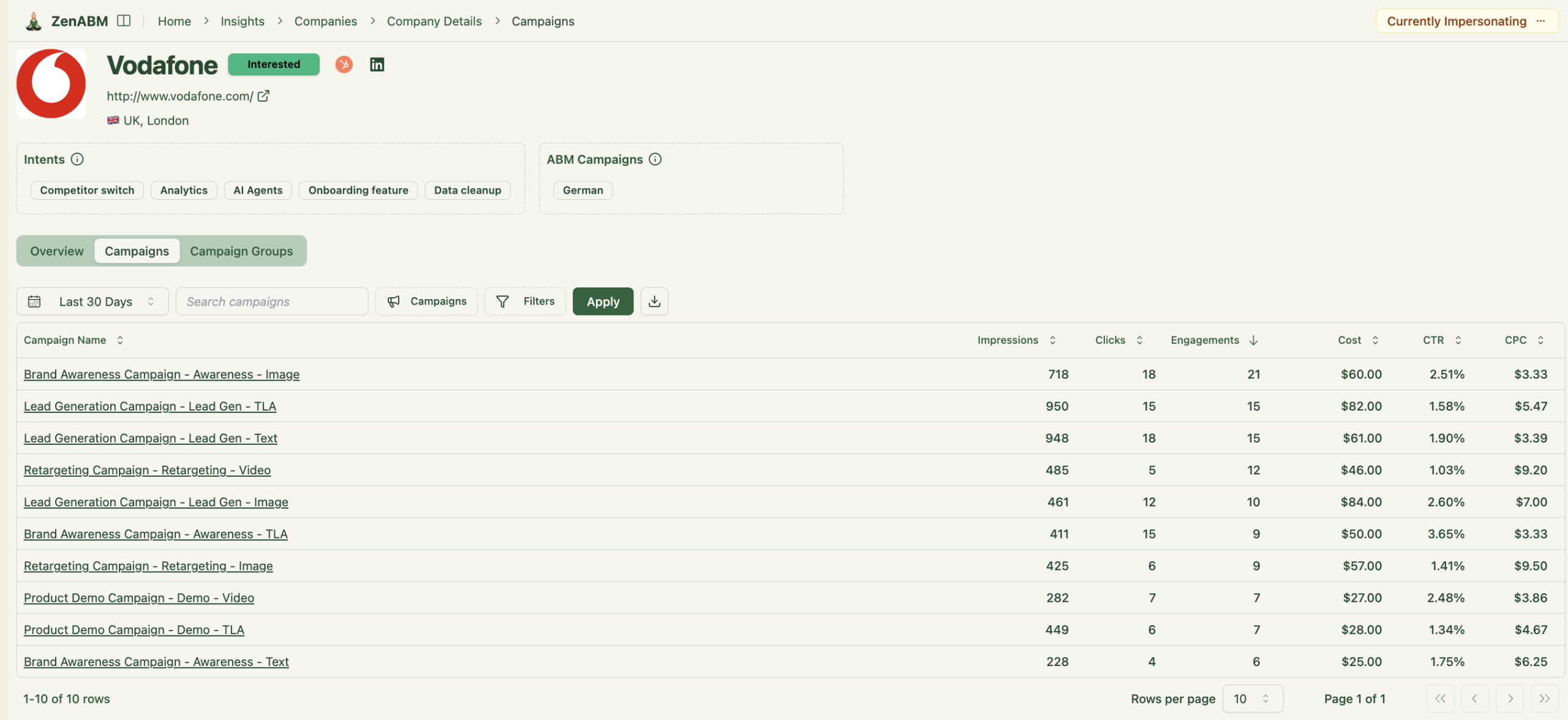
ZenABM also shows the full touchpoint timeline for each company:
ZenABM lets you define stages such as Identified, Aware, Engaged, Interested, and Opportunity and automatically places accounts in the right stage using scores and CRM data.
You control thresholds, and ZenABM tracks movement over time.
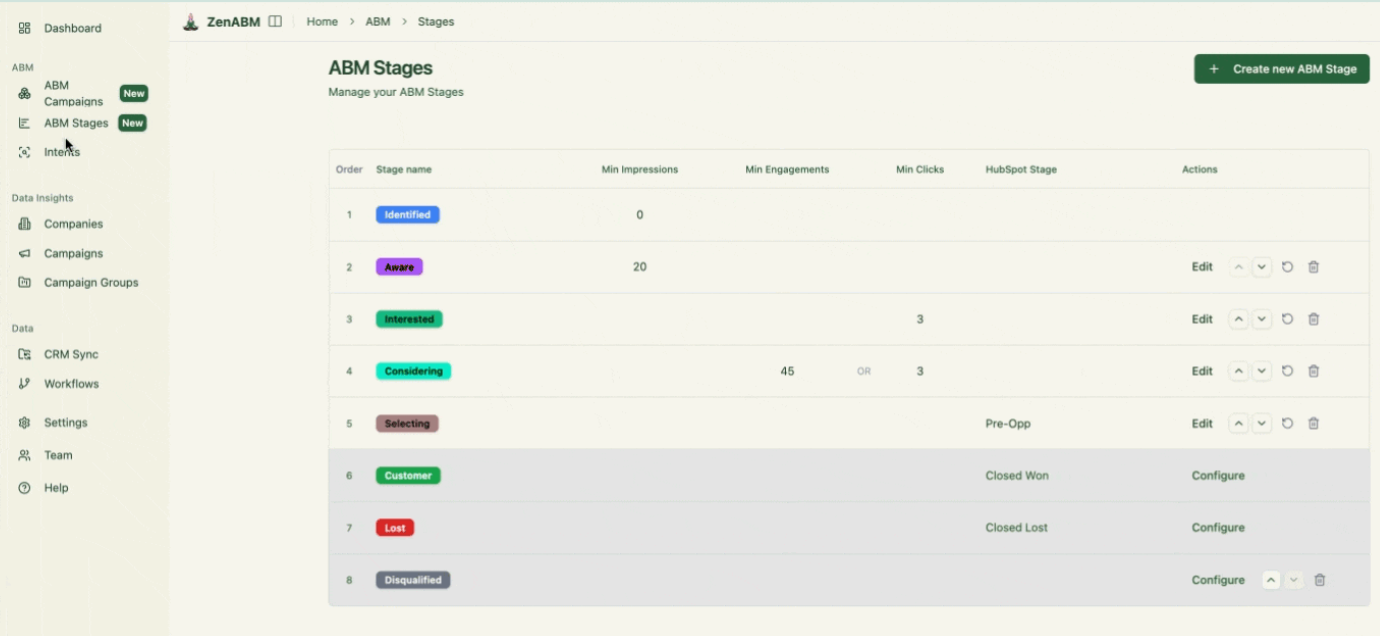
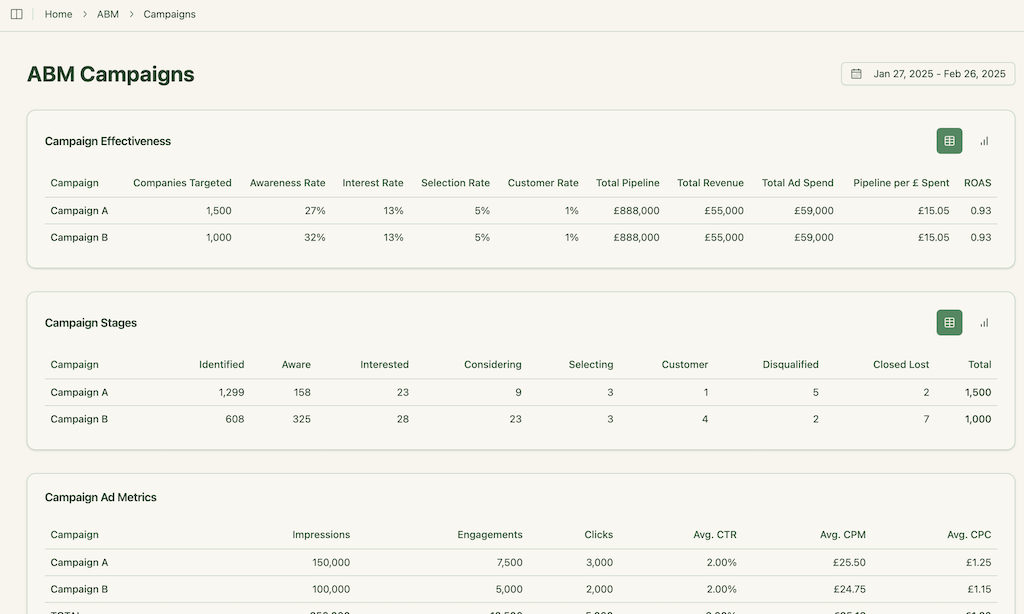
This gives you funnel visibility similar to larger suites, but powered by LinkedIn data.
ZenABM integrates bi-directionally with CRMs like HubSpot and adds Salesforce sync on higher tiers.
LinkedIn engagement data flows into the CRM as company-level properties:
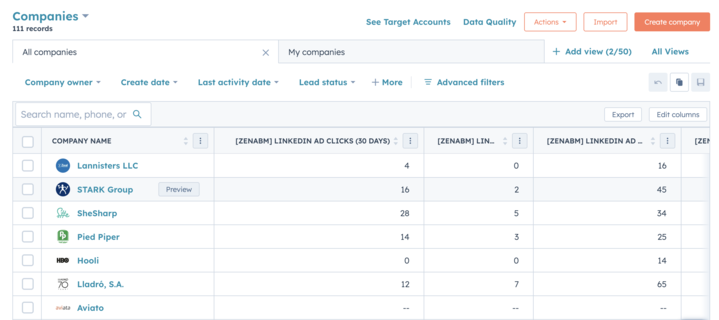
Once an account crosses your score threshold, ZenABM updates the stage to Interested and automatically assigns a BDR.
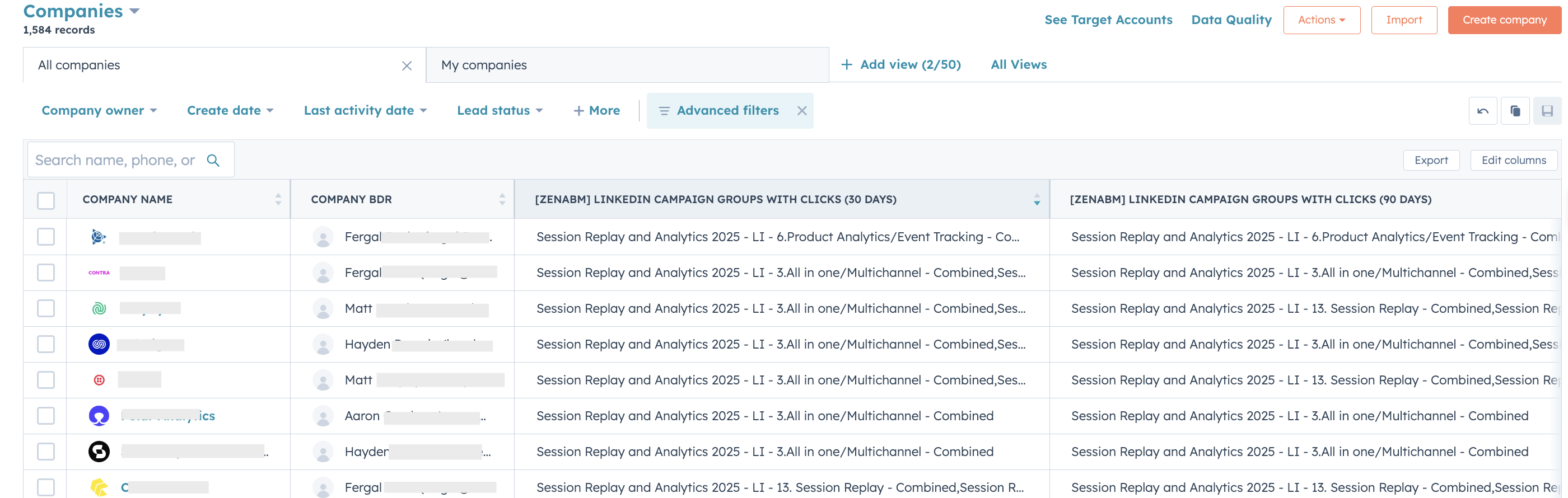
ZenABM lets you derive intent topics from LinkedIn campaigns by tagging campaigns by feature, use case, or offer.
ZenABM then shows which accounts engage with which themes.
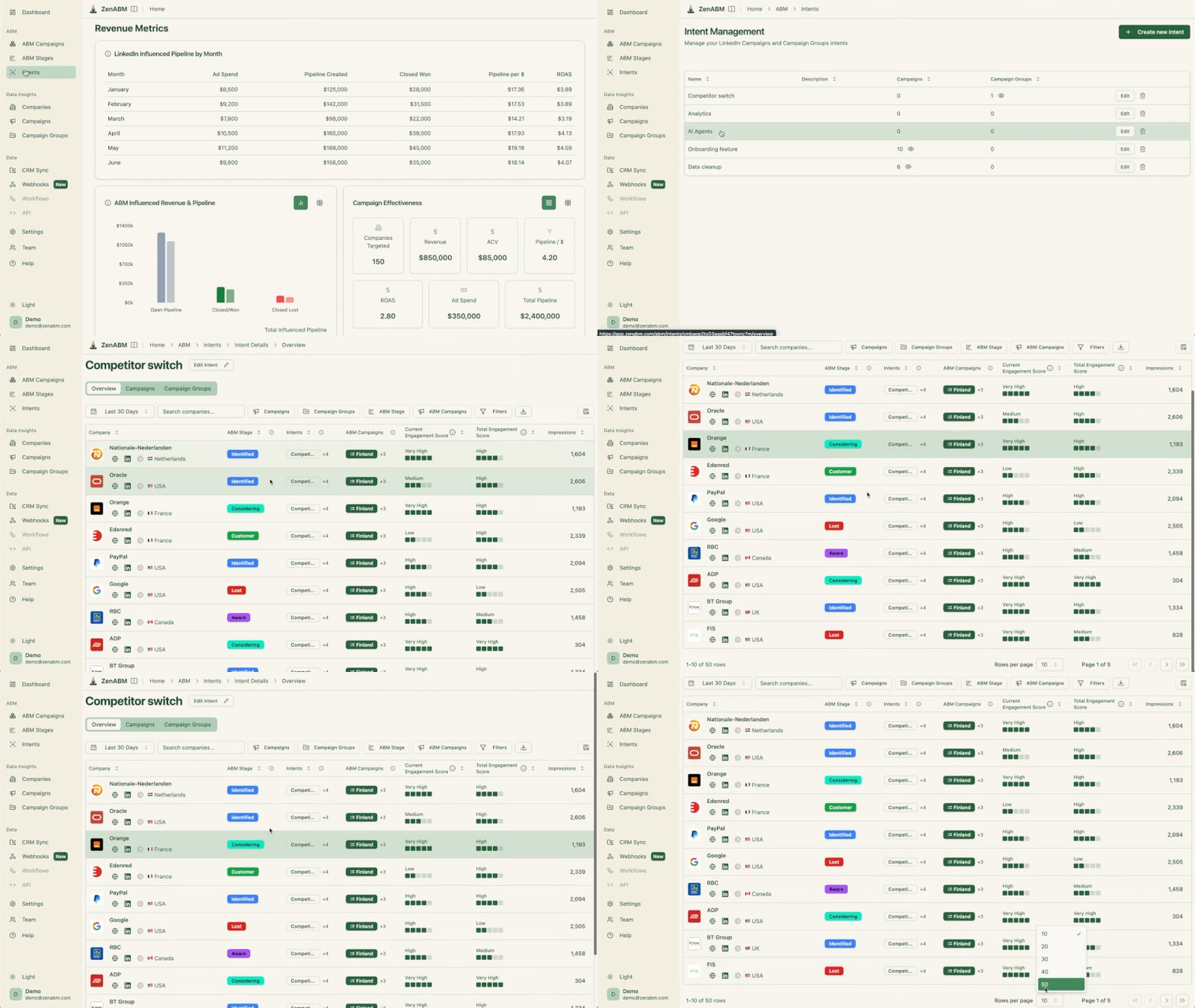
This is clean, first-party intent from owned interactions.
You can push these topics into your CRM, so sales and marketing can tailor outreach to what each company has actually explored.
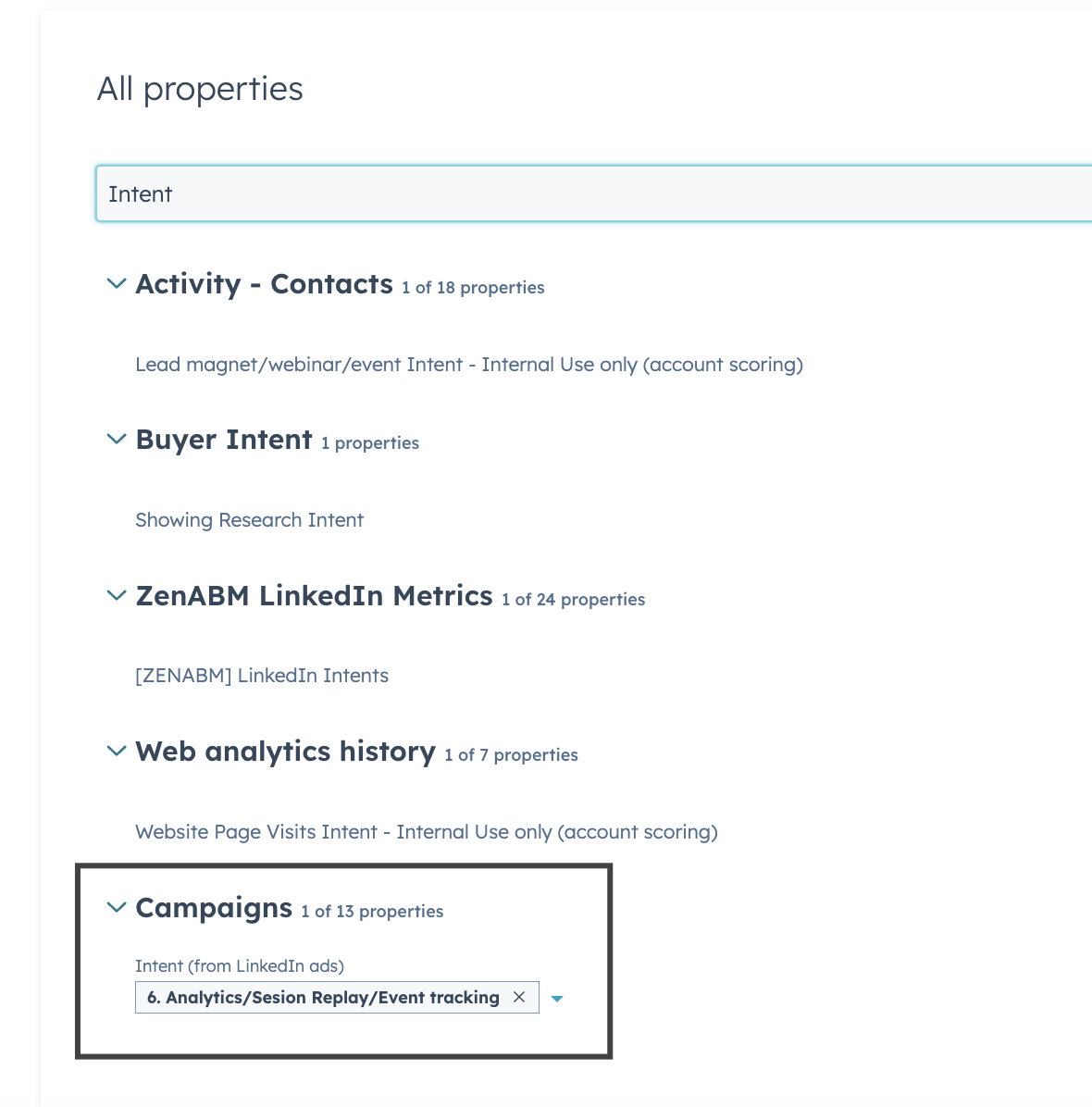
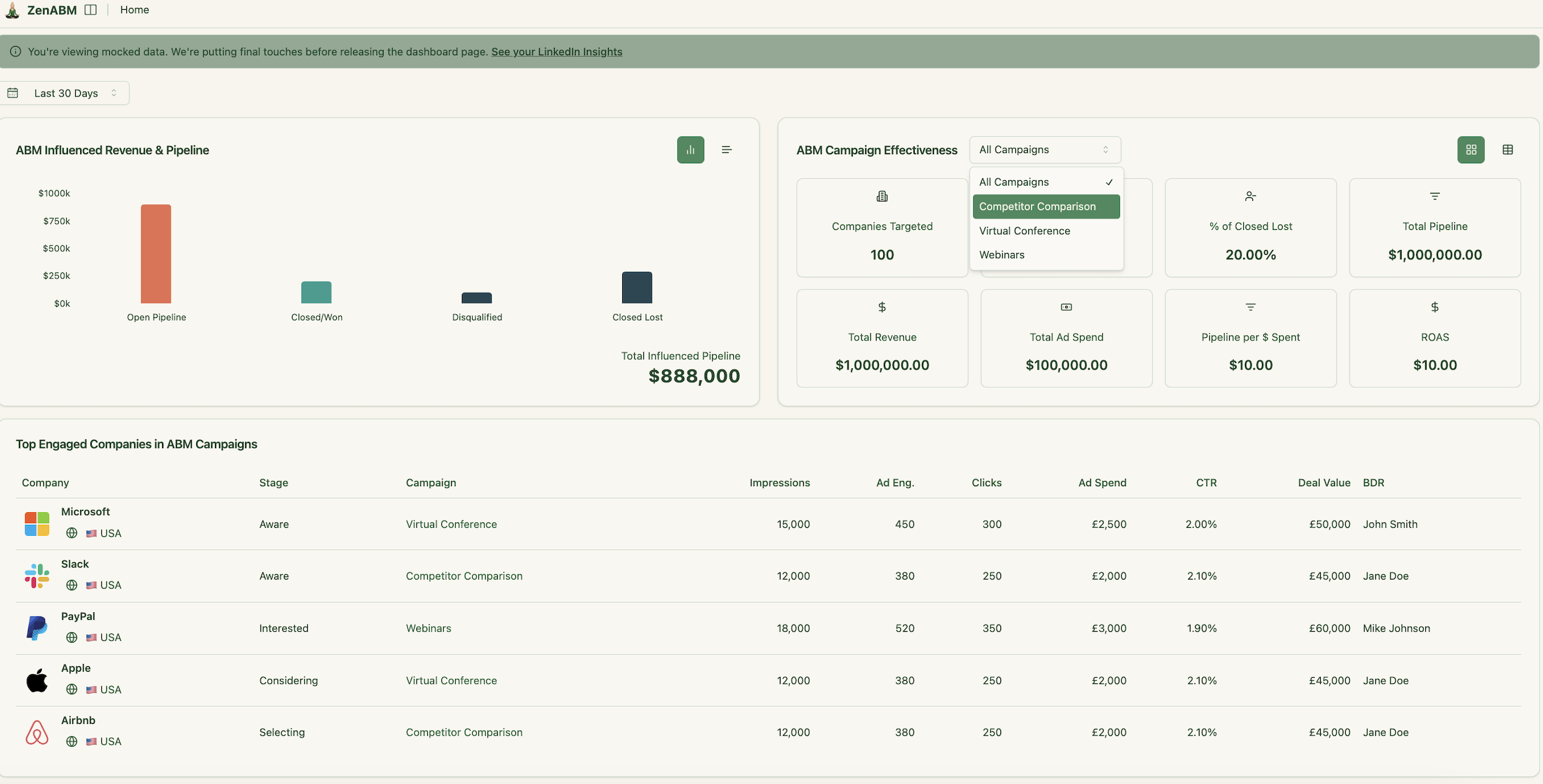
ZenABM ships with dashboards that connect LinkedIn ads to account engagement, stage movement, and revenue.
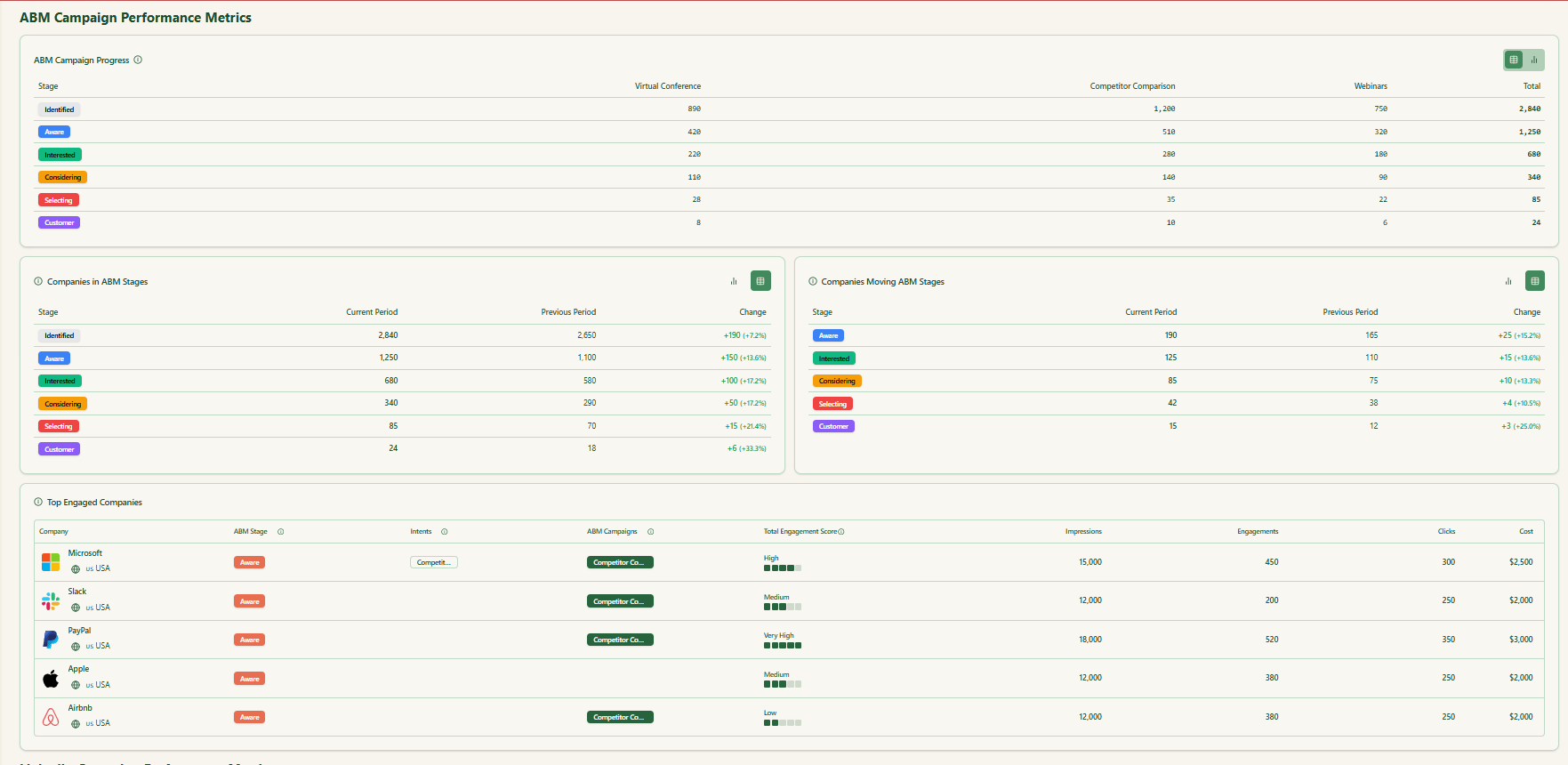
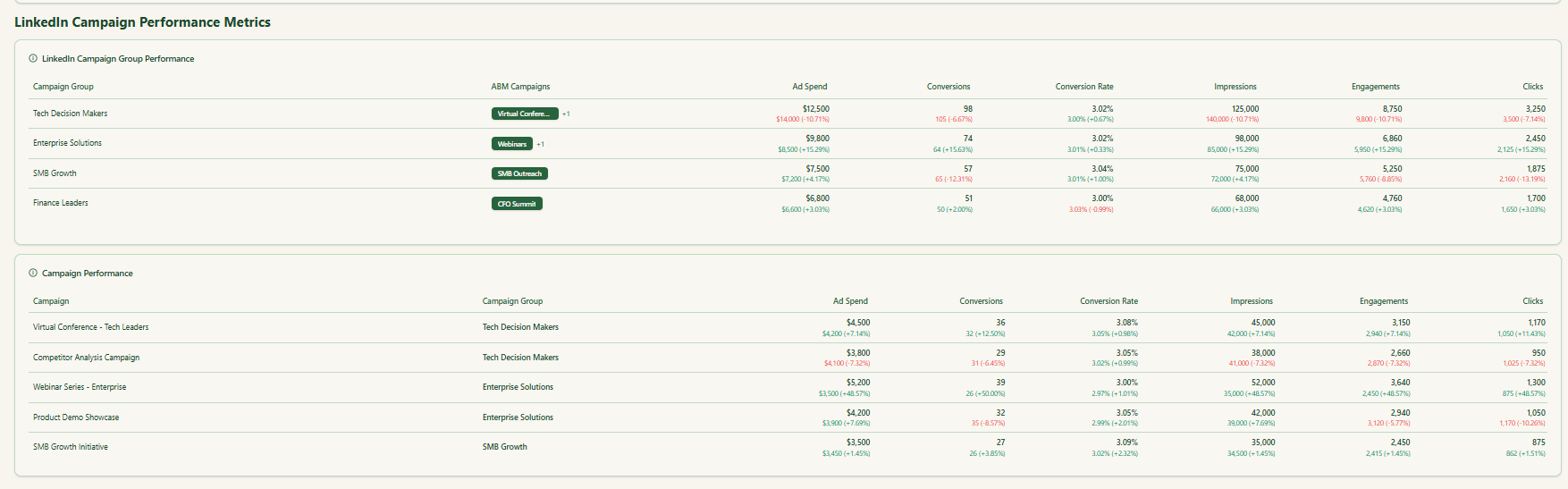
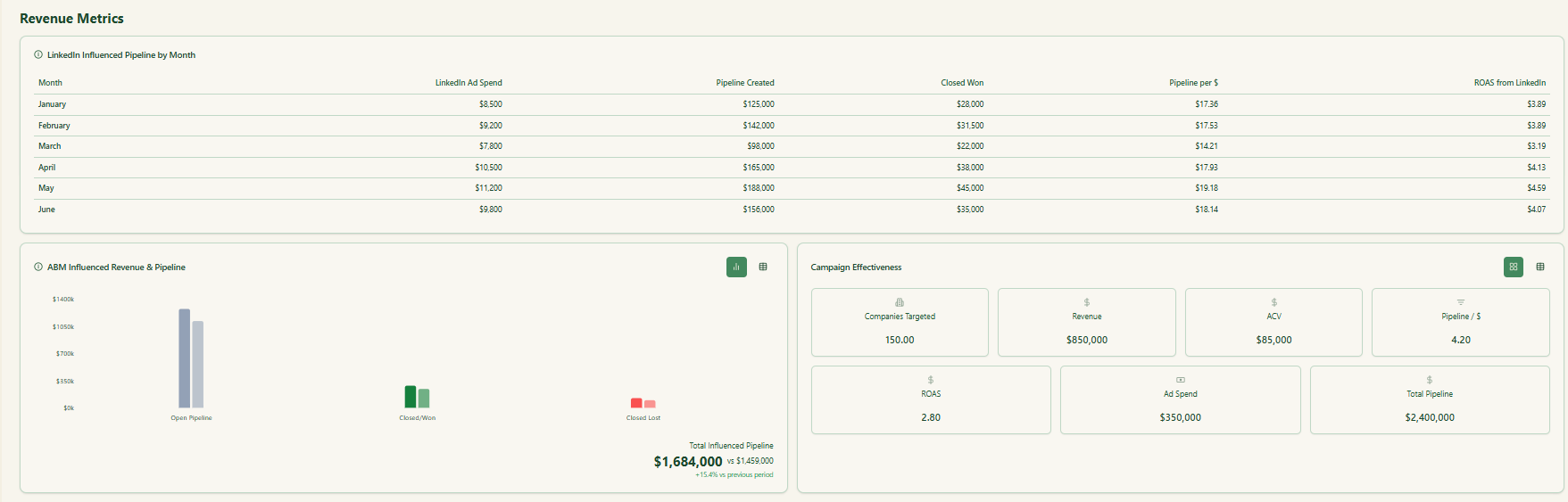
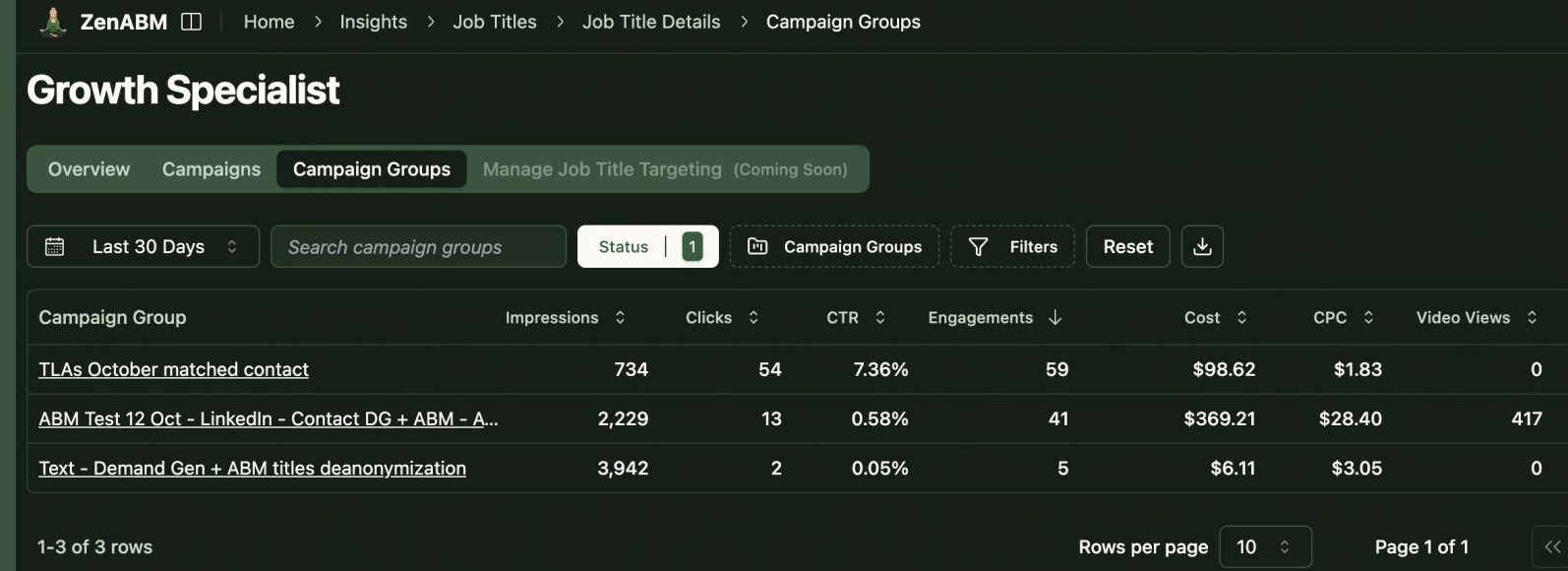
ZenABM shows which job titles engage with your creatives and gives dwell time and video funnel analytics.
ZenABM provides its AI chatbot called Zena that basically answers all you want from ZenABM in natural language.
You can ask Zena open-ended questions like you would a smart analyst and get company-level answers about:
Under the hood, Zena combines OpenAI with a library of carefully designed prompts and endpoints to join ad engagement, spend and CRM deals so it can explain which campaigns drove pipeline, which accounts turned into opportunities, which formats perform best and which companies are high intent but untouched by sales.
Instead of exporting spreadsheets and stitching pivot tables, you get plain language insights, ready to drop into strategy reviews, weekly sales standups or executive updates.
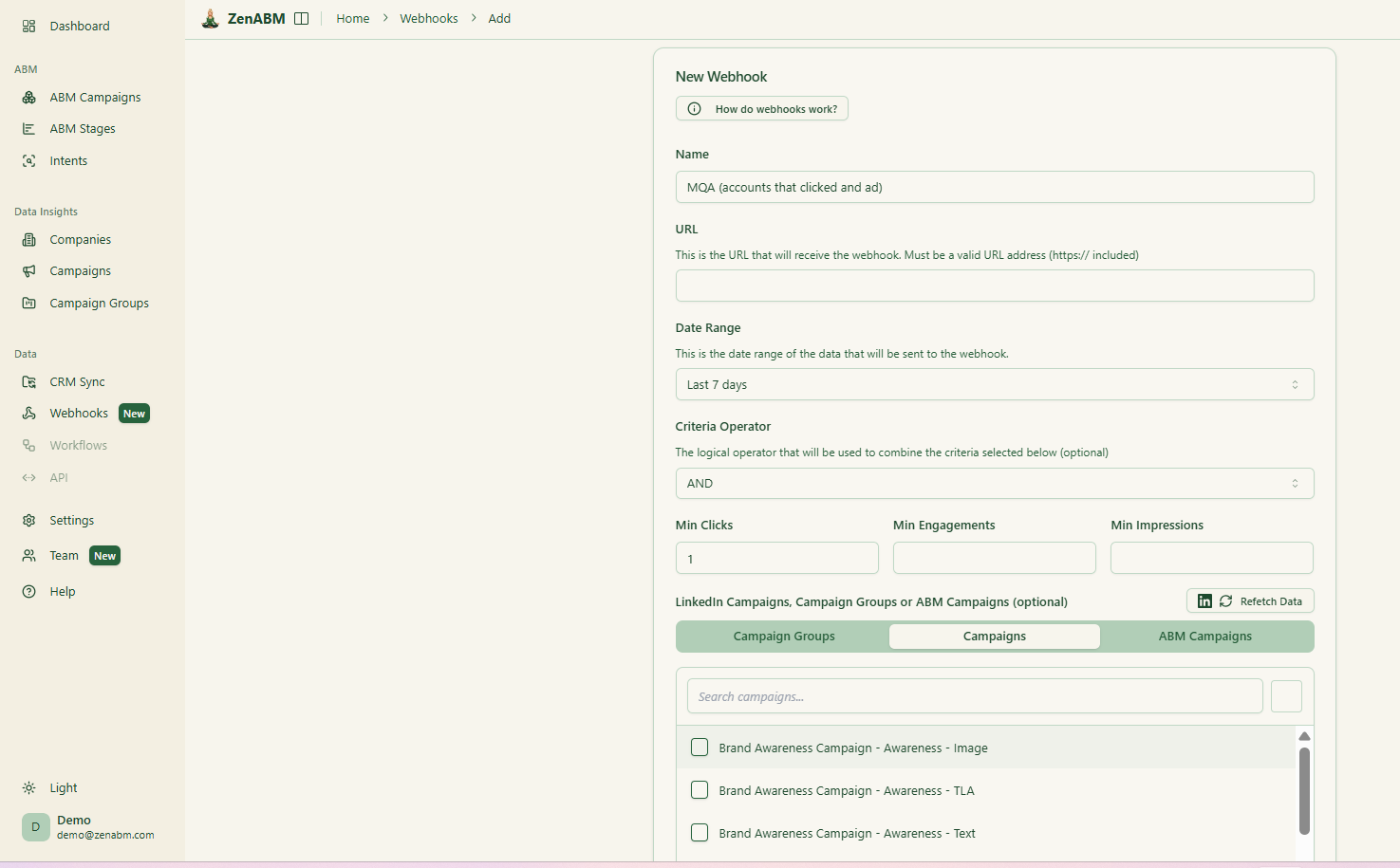
ZenABM’s custom webhooks let you push events into your stack, for example, Slack alerts, enrichment flows, or other ops automations.

Most tools treat each LinkedIn campaign separately. ZenABM lets you group several into one ABM campaign object so you can see performance across regions, personas, or creative clusters.
Instead of juggling fragmented reports in Campaign Manager, you see spend, pipeline, account movement, and ROAS for the entire initiative.
For agencies, ZenABM offers a multi-client workspace.
You can manage multiple ad accounts and clients in one environment, each with its own ABM strategy, dashboards, and reporting, instead of constantly switching accounts in Campaign Manager.
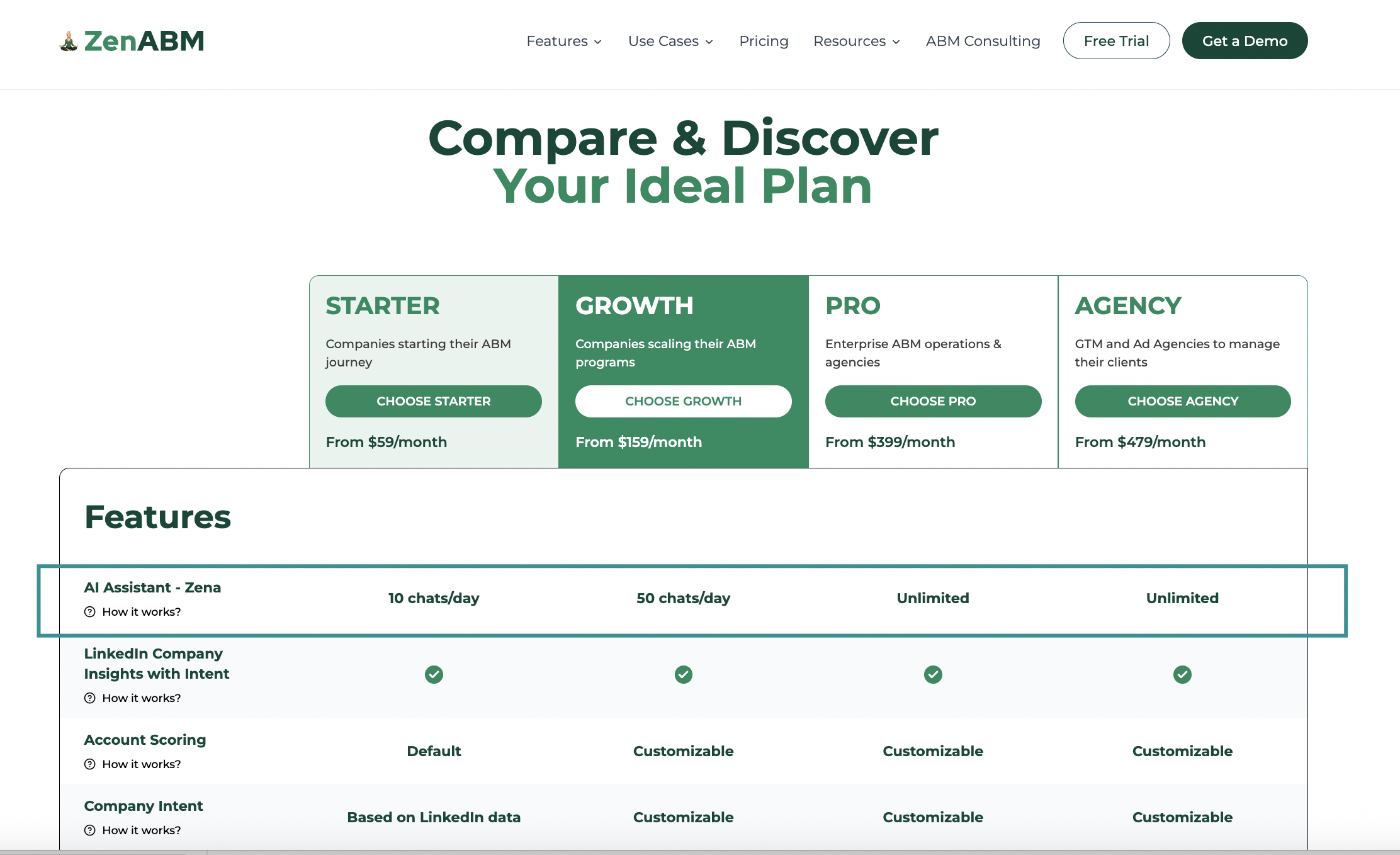
ZenABM pricing details:
N.Rich and Demandbase tackle different layers of the ABM problem.
N.Rich operates as an intent powered media engine that turns ICP definitions and signals into programmatic campaigns and rolls results into account level metrics.
It suits teams that already have a broader stack and mainly need a strong DSP with ABM intelligence.
Demandbase is the heavy suite option. It bundles targeting, ads, site personalization, buying group mapping, intent and analytics into a single platform, with cost and complexity that fit larger, mature ABM programs more than small teams.
If most of your pipeline influence is going to come from LinkedIn anyway, ZenABM is the practical middle path. You get company-level LinkedIn engagement, scores, ABM stages, CRM sync and ROAS metrics without committing to a six-figure platform or rebuilding your entire go-to-market motion around one vendor.
